
Amazon FBA Shipping Guide: Inbound Requirements, Modes and a Consolidation Plan
Shipping to Amazon FBA from China means meeting Amazon's inbound requirements (FNSKU labeling, scannable barcodes, carton weight and size limits, and pallet specs) while still clearing US customs as the importer of record and paying duty. The practical plan is three phases: move samples early to verify product and labeling, book production with a realistic ready date, then consolidate goods from multiple suppliers at a China warehouse, relabel if needed, and ship by the mode that fits your replenish timeline — sea FCL/LCL for steady restocks, air or express for stockouts. Use DDP only if your forwarder can lawfully act as importer of record; otherwise ship DAP/FOB and clear through your own broker. The most common failures are wrong or missing FNSKUs, mixed-SKU cartons, and under-measured cartons that break chargeable weight — all avoidable with a pre-shipment checklist. Verify Amazon's current limits in Seller Central, as they change.
- FBA rejects non-compliant cartons and labels — verify FNSKU, carton limits and pallet specs in Seller Central.
- You are the importer of record and pay duty; DDP works only if the forwarder is authorized to import.
- Consolidate multi-supplier goods at a China warehouse, relabel, then ship by the right mode.
- Sea for planned restocks, air/express for stockouts; never let a stockout force a panic-air at any cost.
- The top failures are labeling, mixed-SKU cartons and bad measurements — a checklist prevents all three.
On this page
What FBA shipping adds to a normal import
A normal import ends at your warehouse. An FBA shipment ends at an Amazon fulfillment center that enforces its own inbound rules before it will receive and stow your inventory. Miss a rule — a missing FNSKU, an unlabeled carton, a box over the weight limit — and Amazon can reject the delivery, charge a correction fee, or remeasure and bill you. So FBA shipping is 'customs clearance plus Amazon compliance', and the compliance half is where sellers lose money.
Amazon's inbound requirements (verify current values)
Amazon publishes carton weight and dimension limits, labeling rules and pallet specifications in Seller Central, and they change, so confirm the current numbers before each shipment. The stable principles are: every unit needs a scannable FNSKU (not just the manufacturer barcode), cartons must be correctly identified as single-SKU or mixed-SKU, carton weight and size stay within the published limits, and palletized shipments follow the specified pallet size and wrapping. Print and apply labels that survive transit — smudged or covered barcodes cause inbound errors.
- FNSKU on every sellable unit; manufacturer barcodes alone are not enough.
- Cartons labeled with the shipment ID and correctly marked single vs mixed SKU.
- Carton weight and dimensions within Amazon's current limits.
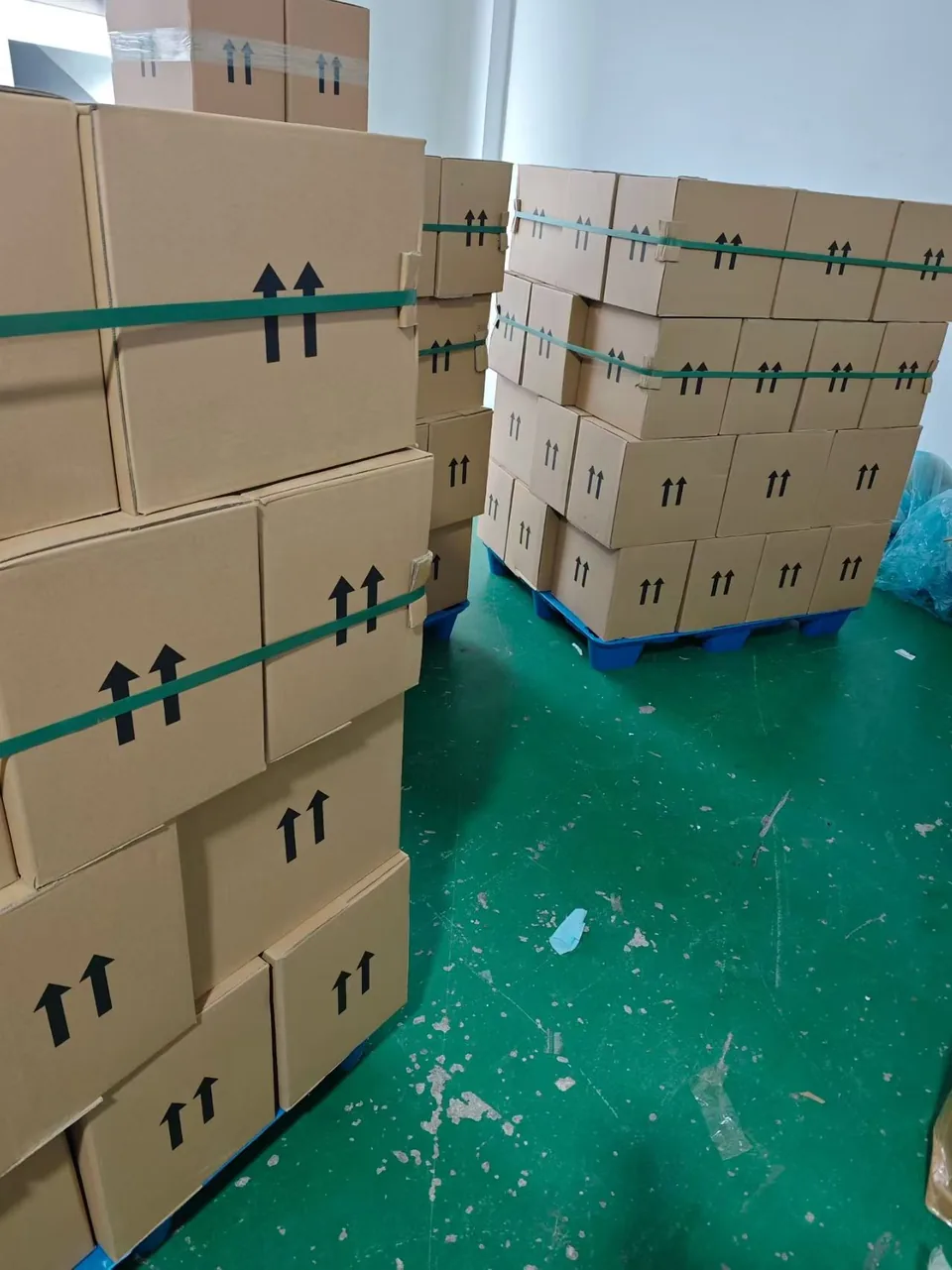
- Pallets to the specified footprint, stacked and wrapped to Amazon's spec.
The three-phase plan
Treat an FBA program as three logistics phases, not one shipment.
- Samples phase: ship a small parcel or air sample to check product, packaging and label quality before you commit to volume.
- Production phase: place the order with a realistic ready date; build your reorder point backward from Amazon's estimated receive time.
- Consolidation and ship phase: collect goods from one or more suppliers at a China warehouse, inspect, relabel to FBA spec, then dispatch by the mode that fits your timeline.
Why consolidation pays for multi-supplier FBA
Most FBA sellers buy from several Chinese factories. Shipping each supplier's goods separately means multiple deliveries, multiple freight minimums and multiple chances to miss an Amazon appointment. Consolidating at one warehouse lets you relabel to FBA spec once, build uniform pallets, and send a single inbound shipment — usually cheaper and far easier for Amazon to receive.
Choosing the mode
Mode follows your stock position. For planned restocks with lead time, sea FCL or LCL is the lowest cost and is where most replenishment volume should move. For a looming stockout, air or express protects the listing but costs several times more per kg, so reserve it for true emergencies or high-margin SKUs. A useful discipline: never let a stockout force a panic-air shipment at any cost — keep a safety buffer and a standing reorder so most volume travels by sea.
| Situation | Recommended mode | Why |
|---|---|---|
| Planned restock, 4+ weeks lead | Sea FCL/LCL | Lowest cost per unit |
| New SKU launch buffer | Sea + small air sample | Test demand without over-committing |
| Stockout risk < 2 weeks | Air or express | Protect the listing, accept higher cost |
| Multiple suppliers | Consolidate then sea | One inbound, easier receiving |
Customs and importer of record
FBA is not the importer of record — you (or your broker) are. You must provide a valid customs bond, an accurate HS code and a declared value, and pay duty and any Section 301 or anti-dumping measures that apply to your product. DDP can simplify this only if your forwarder is authorized to act as importer of record in the US; otherwise ship DAP or FOB and clear through your own broker. Never assume 'Amazon handles customs' — it does not.
Pre-shipment checklist
- FNSKU applied and scannable on every unit; shipment ID on every carton.
- Carton weight, dimensions and SKU mix within Amazon's current limits.
- HS code and declared value correct; duty and bond arranged.
- Consolidation plan ready if more than one supplier is involved.
- Mode chosen against your real stockout date, not a guess.
- Destination FBA center and appointment confirmed.
Common mistakes
- Shipping manufacturer-barcoded units without FNSKUs — Amazon cannot stow them.
- Mixing SKUs in a carton that Amazon expects to be single-SKU.
- Assuming FBA is importer of record and skipping your own customs entry.
- Under-measuring cartons so chargeable weight (and the FBA remeasure fee) bites.
- Using panic air freight for every restock because no reorder buffer exists.
Next steps
Send your SKU list, supplier list, target FBA center and reorder timeline and we will build a consolidation and mode plan that meets Amazon's inbound rules and keeps your duty and transit under control.