
Shipping Auto Parts from China to Canada: Hitting a 30-Day Delivery Window
For a 30-day Canada plan, ocean LCL or a consolidated FCL covers most auto-parts orders if you start at supplier PO lead time and pad for origin carton/loading plus 18-25 days transit plus CBSA clearance; reserve air only for the few SKUs that slip the window. Select by cube, weight and urgency: dense metal parts fill weight before volume, so compare the chargeable weight-or-measure against air's faster clock. Key milestones are PO to carton to sail to clear to deliver. Next action: get HS 8708 classification and open a CARM BN.
- Start the 30-day clock at the supplier ready-date, not at PO placement: brake pads, filters, sensors and lighting are built to order, so the supplier lead time - not the vessel departure - decides whether a 30-day window is even achievable.
- Pick the mode by chargeable figure and urgency: dense metal auto parts hit weight before cube, so ocean LCL or FCL wins on cost while air wins only on the time-critical SKUs that would otherwise miss the window.
- Classify under HS 8708 and register for CARM before the cargo sails: the importer needs a BN9/RM account and a 10-digit tariff number, and the CAD accounting document replaces the old B3.4
- Treat 30 days as a planning target, not a promise: pad origin handling, 18-25 days of ocean transit and CBSA release, and keep air as the fallback for slipped SKUs.
On this page
Can you hit a 30-day China-to-Canada window with auto parts?
Yes, a 30-day delivery window is achievable for most auto-parts orders from China to Canada if you measure it from the supplier ready-date, not from the day you place the purchase order. Brake pads, filters, sensors, lighting and small mechanical components are typically compact and dense, which suits ocean LCL or a consolidated FCL, and China-to-Canada ocean transit of 18-25 days leaves room for origin handling and CBSA clearance inside a month. Treat the 30 days as a planning target: start the clock when goods are packed and ready, pad one to three days for carton building and loading, and reserve air for the handful of SKUs that slip.
The decision is rarely about distance - it is about lead time and mode. If the supplier needs three weeks to build a made-to-order batch, no freight mode recovers that inside the window; conversely, if parts are stock-ready, ocean LCL can land them in Canada within the month. When you plan shipping auto parts from China to Canada, settle the supplier ready-date first, then choose the mode that fits the remaining days. A 30-day promise made at PO placement, before the build schedule is confirmed, is the single most common way this plan fails.
Ocean LCL, FCL or air: which mode fits a 30-day plan?
For a 30-day Canada plan, ocean LCL covers most auto-parts orders because the cargo is small, dense and multi-SKU, and a consolidated container buys 18-25 days of transit plus clearance at a cost far below air. A full FCL 20GP makes sense once volume approaches five to eight CBM or when you need a sealed box for high-value sensors and lighting. Air freight is the fallback, not the default: it compresses transit to a few days but costs several times more, so use it only for urgent SKUs that would otherwise miss the window.
Compare the three modes on one identical scope - the same cartons, currency, Incoterm and delivery address - or the cheaper-looking quote will be wrong.5 The table below models a 6 CBM, 2,800 kg mixed order from a Guangdong supplier to a commercial warehouse near Toronto in CAD on DAP terms. All figures are a Planning Example, not live rates; confirm a current quote before booking, and remember that terminal handling fees apply at both ends.6
| Cost line | Ocean LCL (CAD) | Ocean FCL 20GP (CAD) | Air freight (CAD) |
|---|---|---|---|
| Origin cartage, THC, documentation and export handling | 720 | 1,150 | 540 |
| Line-haul freight, port-to-port (ocean) or airport-to-airport (air) | 1,450 | 2,600 | 8,900 |
| Destination terminal (THC, wharfage) and de-consolidation | 520 | 690 | 310 |
| Customs entry, broker fee and CARM CAD filing (duties excluded) | 320 | 320 | 320 |
| Inland delivery to commercial warehouse, Greater Toronto | 410 | 760 | 410 |
| Total, duties and taxes excluded | 3,420 | 5,520 | 10,480 |
Table 1 rates are planning examples to confirm, not a quotation or tariff. Port-to-port ocean transit is 18-25 days; air transit is door-to-door in days. Re-quote on the same scope, currency and Incoterm before booking.
Why dense metal parts are billed on weight, not cube
Auto parts are the classic dense commodity: a carton of brake pads or a box of steel brackets weighs far more per cubic metre than furniture or apparel, so ocean LCL is rated weight-or-measure and the chargeable figure is usually the weight, not the volume. Measure the packed gross weight in kilograms and the CBM, then apply the carrier's weight-or-measure rule - commonly 1 CBM treated as 1,000 kg - and pay on the greater. A 6 CBM order at 2,800 kg is billed on weight, so shaving carton size saves little; consolidating with other SKUs to fill a shared container saves more.
Use the CBM calculator on packed dimensions, not catalogue sizes, because foam, anti-rust paper and double-wall cartons add volume that changes the weight-or-measure crossover. Lighting and sensors are lighter and more fragile, so they may ride on cube and need careful stowage; keep them in the same consolidation only if their density does not inflate your chargeable weight. A balanced mix of dense and light SKUs is exactly what makes a shared LCL container cost-effective.
When does air beat weight-based ocean pricing?
Air is charged on chargeable weight using a 1:6 volumetric factor, where 1 kg equals 6,000 cm3, and dense metal parts convert badly, so air is rarely cheaper. It wins only when the delay cost of a missed SKU - a production line stop or a confirmed retail date - exceeds the freight premium. Budget air as insurance, not routine, and compare it on the same scope you used for ocean so the decision is honest.
Classify under HS 8708 and estimate duty before you book
Most automotive parts fall under Chapter 8708 of the Canadian tariff, which covers parts and accessories for motor vehicles; the exact 10-digit code decides the rate of duty and any surtax. Brake pads, filters, sensors, lighting and small mechanical components often sit in different 8708 subheadings, so classify each SKU, not the whole order, and confirm the current official tariff because rates and remissions change. A wrong code risks a re-assessment, a delay at release and interest, none of which fit inside a 30-day window.
Estimate duty on the transaction value before quoting landed cost, and remember that Canada also applies GST/HST at import on the duty-paid value; the importer accounts for both through the CARM system.3 Duty remission programs exist for some automotive parts under specific trade measures, so verify eligibility rather than assuming the base rate applies. The HS code basics guide explains how to read the 10-digit structure and where the rate is set.
CBSA and CARM: register a BN9/RM account and file the CAD
Canada's commercial import regime runs through CARM (the CBSA Assessment and Revenue Management system), and the importer must register in the CARM Client Portal and obtain a Business Number with an RM program account - often referenced as BN9/RM - before goods arrive.1 The importer also needs a 10-digit tariff classification for each SKU and a reasonable estimate of duties and taxes.2 Without a registered BN/RM, the shipment cannot be released and the 30-day window collapses at the border.
The old B3-3 customs accounting document has been replaced under CARM by the Commercial Accounting Document (CAD), which records the duty and tax coding for the entry.4 Your broker transmits the CAD through CARM, and commercial goods are released once the declaration and supporting data are in order.1 Register early, not at arrival, because portal setup and delegation to a broker take time that the clock does not refund; a last-day registration is the fastest way to convert a 30-day plan into a 40-day one.
- Create a CARM Client Portal account and obtain a Business Number with an RM program account (BN9/RM) before the cargo sails.1
- Delegate authority to your customs broker inside the portal so they can file the CAD on your behalf.
- Confirm the 10-digit HS 8708 code for each SKU and estimate duty and GST/HST.2
- Have the broker transmit the CAD through CARM and clear the goods once the declaration is in order.1
Marking, labelling and bilingual requirements
Canadian imports must meet marking rules so the country of origin and product identity are clear at resale; auto parts should carry the country of origin, part number and a legible supplier or brand mark on the carton and, where applicable, on the part itself. Bilingual (English/French) labelling applies to consumer-facing information under federal requirements, so confirm which markings your SKU needs before packing rather than at the border. Missing or unclear origin marks can trigger a marking determination, a relabelling order or a delay that costs days inside a 30-day plan.
Lighting and sensors with electrical ratings should show voltage, certification marks where required, and any hazard statements; keep the marks on the carton and the part so both survive handling. Photograph the marks at the warehouse so your broker and CBSA have evidence if questioned, and store the photos with the same data pack that drives the CAD filing.1
Packaging: anti-rust, carton and pallet for metal parts
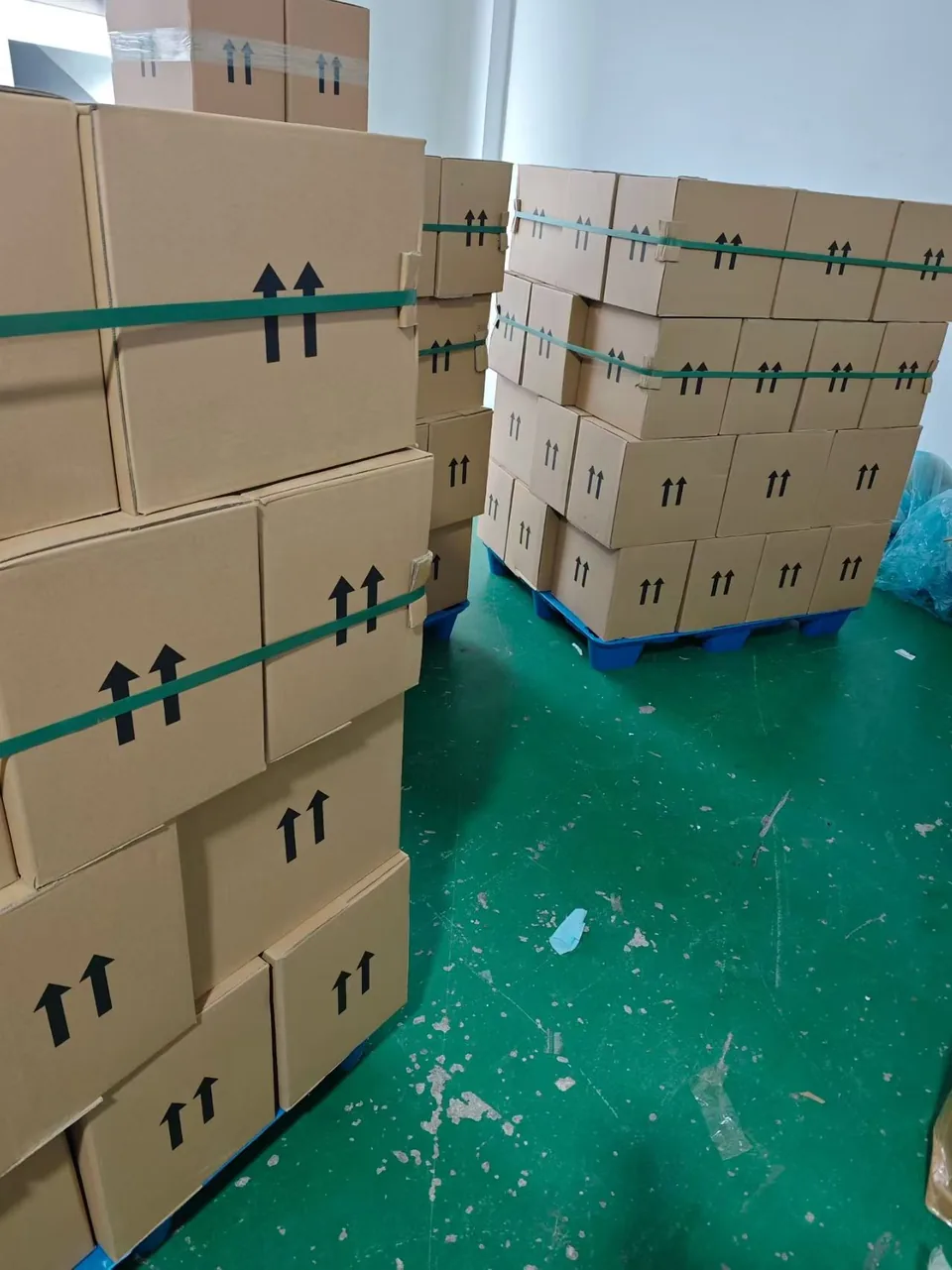
Metal auto parts rust in the humid, salty air of an ocean crossing, so packaging is a cost you pay before freight, not an option. Wrap brake pads, steel brackets and machined components in VCI (vapour corrosion inhibitor) paper or an anti-rust poly bag with desiccant, then double-wall cartons with edge boards, and finally stretch-wrap and strap the cartons to a pallet so the stack stays stable in a shared LCL container. Mark this-side-up and no-top-load for sensors and lighting that crack under pressure.
Solid-wood pallets and crates must carry the ISPM 15 treatment mark; plywood and OSB are generally exempt, but verify the current official notice before booking because standards are revised. Palletising speeds de-consolidation and protects cartons, though the pallet consumes cube that dense parts can ill afford, so balance protection against the weight-or-measure bill. The customs clearance steps guide lists what inspectors look for on arrival and why clean, marked cartons clear faster.
A 30-day milestone timeline from ready-date to delivery
Laid out as a planning target measured from the supplier ready-date, a 30-day Canada plan flows PO lead time to carton to sail to clear to deliver. The ready-date is when packed cartons exist; everything after fits in roughly four weeks if nothing slips. The table below is an Illustrative Calculation with stated assumptions - port-to-port transit is 18-25 days, while clearance and final-mile are door-side estimates - so confirm the current sailing schedule before promising a date, and keep terminal handling fees in the build.6
| Day (from ready-date) | Milestone | Activity | Planning note |
|---|---|---|---|
| Day 1 | Origin cartage and export clearance | Cartons moved to CFS or CY; export declaration filed; container sealed or consolidated. | Pad 1-3 days for carton and pallet build. |
| Day 3 | Vessel sails | LCL or FCL departs South China load port; port-to-port clock starts. | Transit to Canada 18-25 days. |
| Day 21 | Arrival at port of discharge | Vessel berths; container or LCL lot discharged. | Vancouver direct or rail transload to Toronto. |
| Day 24 | CBSA release | Broker files the CAD in CARM; commercial goods released after document check. | Requires BN9/RM and 10-digit HS 8708 codes.2 |
| Day 27 | De-consolidation or container pick-up | LCL stripped at CFS; FCL drayed to warehouse. | Terminal free time applies; avoid storage. |
| Day 30 | Final-mile delivery and receipt | Cartons delivered to commercial warehouse; proof of delivery signed. | Keep air as fallback for slipped SKUs. |
Table 2 is an Illustrative Calculation, not a transit guarantee. Port-to-port figures assume a direct or rail-transloaded sailing; weather, cut-offs and CBSA volumes shift the release day. Keep air as the fallback for SKUs that slip the window.
What to send your forwarder for an accurate 30-day quote
An accurate quote needs a complete data pack, because a quote built on estimates is revised upward at the destination and eats the window. Send the same scope you will actually ship: packed dimensions, weights, HS codes, Incoterm and delivery access together. Anything missing returns as a de-consolidation surprise, a misclassification or a failed delivery appointment, and each one costs days you do not have.
- Packed carton dimensions per SKU, carton count and total gross weight in kilograms.
- Total and per-carton CBM, and which figure is chargeable weight-or-measure.
- Stackability and no-top-load items, especially for sensors and lighting.
- Photos of packed cartons, anti-rust wrapping, pallet build and any ISPM 15 stamp.
- 10-digit HS 8708 codes per SKU and invoice values for duty estimates.2
- Supplier ready date, origin pickup address, chosen Incoterm and required delivery date.5
- Exact delivery address, dock or liftgate access, receiving hours and contact name.
- BN9/RM status and CARM delegation to your broker so release is ready.1
Common mistakes that blow the 30-day window
Most failures are made before the cargo moves: under-estimating PO lead time, missing CARM registration, or comparing modes on different scopes. Lock the data pack, packaging spec and registrations at the purchase-order stage and re-confirm them at the ready date, because the issues below each cost little at booking and a lot at the destination.
- Under-estimating PO lead time: the supplier build time, not transit, is what breaks a 30-day plan; confirm the ready date before promising delivery.
- Missing CARM registration: no BN9/RM means no release, so register and delegate the broker early.1
- Quoting LCL and FCL on different scopes: restate both on the same volume, currency, Incoterm and address.5
- Ignoring terminal handling fees: OHC/DHC and import documentation fees apply at both ends and change the comparison.6
- Skipping anti-rust packaging: metal parts corrode on ocean legs and arrive as claims, not stock.
- Using catalogue dimensions: re-measure packed cartons, then recompute chargeable weight-or-measure.
If factory, forwarder and broker hold different carton lists or HS sets, the CAD and entry disagree and cause holds. Name one owner for the data pack.