
Shipping Auto Parts from China to the USA: A Logistics Guide for Importers and Distributors
For mixed auto-parts replenishment from China to the USA, default to ocean FCL once dense cast parts approach roughly two-thirds of a 20ft container's usable payload; use Ocean LCL only for small, non-urgent top-up orders. Air freight suits one-off fragile or warranty-critical components, never dense iron castings. The decisive criterion is weight density per pallet position: heavy, stackable, non-hazardous parts reward FCL, while battery- or liquid-bearing lines must be segregated and documented before they are booked. Confirm current schedules and rates with the carrier before committing.
- Split the order into four handling streams - ordinary, heavy cast, fragile, and battery or liquid parts - before requesting one freight quote, because each stream changes booking and documents.
- For dense cast parts, compare LCL and FCL on one identical door-to-door scope in USD under the same Incoterm; LCL billing on the greater of volume or weight punishes weight, not volume.
- Lock pallet footprint, gross weight per position and stackability at the supplier, since a US warehouse may need a dock, a pallet jack and a forklift with adequate tine length.
- Reconcile every SKU against the commercial invoice and the HTS line; the importer of record keeps classification and record-keeping duties even under DDP.
- File ISF before ocean loading and verify the treatment mark on solid-wood crating; check the latest official notice before booking because rules and terminal fees change.
On this page
How should you split a mixed auto-parts order before asking for one freight quote?
Split the purchase order into four handling streams before you request a rate: ordinary parts, heavy cast parts, fragile parts, and parts containing batteries or liquids. A distributor replenishing a warehouse, a repair-chain buyer and a marketplace seller all place one order mixing brake discs, headlamps, sensors and keyless modules. Those lines share an invoice but not a booking rule, and one undeclared lithium cell can hold the whole container at origin.2
Give each stream its own packing-list lines and pallet positions. Ordinary brackets travel as general cargo; cast housings drive the weight calculation; lamps and clusters need dividers and a no-stack rule; battery- or liquid-bearing lines need a declaration and physical separation. The importer of record stays responsible for classifying every line even when a DDP provider arranges transport, so do this work at sourcing rather than at the border.
- Ordinary parts cover fasteners, brackets, filters and stamped components that tolerate normal stacking and need only a plain carton.
- Heavy cast parts cover brake rotors, engine blocks and housings, where one pallet can exceed a tonne and weight decides the freight basis.
- Fragile parts cover lamps, mirrors, glass and sensors, which need dividers, corner boards and a photographed pack-out.
- Battery-bearing parts cover TPMS sensors, keyless modules and start-stop trays, which need a battery declaration and a test-summary check.
- Liquid-bearing parts cover oil-filled dampers and coolant reservoirs, which need leak-proof sealing, upright orientation and a material statement.
When does ocean FCL beat LCL and air for auto parts, and when does each fail?
For a mixed replenishment, ocean FCL is the working default once dense cast parts approach roughly two-thirds of a 20ft container's usable payload; Ocean Freight in LCL form suits small, non-urgent top-ups, and air freight is reserved for one-off warranty-critical components. Each option has a failure condition. LCL becomes costly when weight dominates, because the consolidator bills on the greater of volume or weight and adds a CFS step; FCL ties up cash on genuinely small orders; air cannot move dense iron economically.
Transit has two clocks. Port-to-port from Ningbo or Shanghai to Los Angeles/Long Beach is a planning estimate of 14 to 21 days, not your delivery date; customs release, inland rail to a Chicago-area warehouse, devanning and a booked appointment add another 14 to 21 days, making door-to-door roughly 28 to 42 days. Confirm the current schedule with the carrier, because sailings and congestion change, and note that clearance, de-consolidation and final-mile delivery all add time.
What booking, document and packaging rules apply to each part category?
Each part category carries a different booking instruction, document set and packaging specification. Booking a pallet of cast rotors as loose cartons, or describing a TPMS sensor simply as auto part, removes the information the carrier and broker need to price and release the load. Use the matrix below to turn the supplier's packing list into a freight instruction; it is a planning template, so check the latest official notice before booking.
The matrix assumes a commercial delivery to a warehouse with a dock, not a residential address. Every solid-wood pallet or crate used for the heavy lines must carry a compliant treatment mark, while plywood and processed wood are generally treated differently.4 Where a line contains both a battery and a liquid, apply the stricter stream's rules and keep it on a separate, labelled pallet.
| Part category | Booking treatment | Documents and declarations | Packaging and pallet spec |
|---|---|---|---|
| Ordinary fasteners, brackets, filters, hoses | General cargo; consolidate and palletise by SKU | Specific description per SKU; HTS line per part family | Standard pallet, wrapped, stackable two high, weight on label |
| Cast rotors, housings, blocks, flywheels | Book on weight; stay below container payload | Gross weight per pallet; cast-iron vs aluminium lines | Heavy skid, low centre of gravity, no stacking, strapping |
| Lamps, mirrors, glass, clusters, sensors | Keep near the door; never under heavy lines | Fragile description; photographed pack-out on file | Dividers, corner boards, do-not-stack mark, upright only |
| TPMS, keyless modules, start-stop trays | Declare battery cargo; segregate on one pallet | Battery declaration; UN38.3 summary; cell chemistry | Non-conductive inner packing; terminal protection; one high |
| Oil-filled dampers, shocks, coolant tanks | Declare contained liquid; keep upright and separate | Material and leak-proof statement; carrier check | Sealed caps, absorbent layer, upright mark, spill tray |
Which pallet specifications let a US warehouse receive the load without re-handling?
Agree the pallet footprint, gross weight per pallet, stackability and label format with the supplier before the goods leave the factory, because the receiving warehouse accepts or rejects the load on those four numbers. Most US commercial warehouses receive on a 48 x 40 in GMA-style pallet with a dock and a forklift, not loose cartons; non-standard pallets are commonly re-palletised and charged back. Use the CBM calculator to check that the declared cube matches the pallet count.
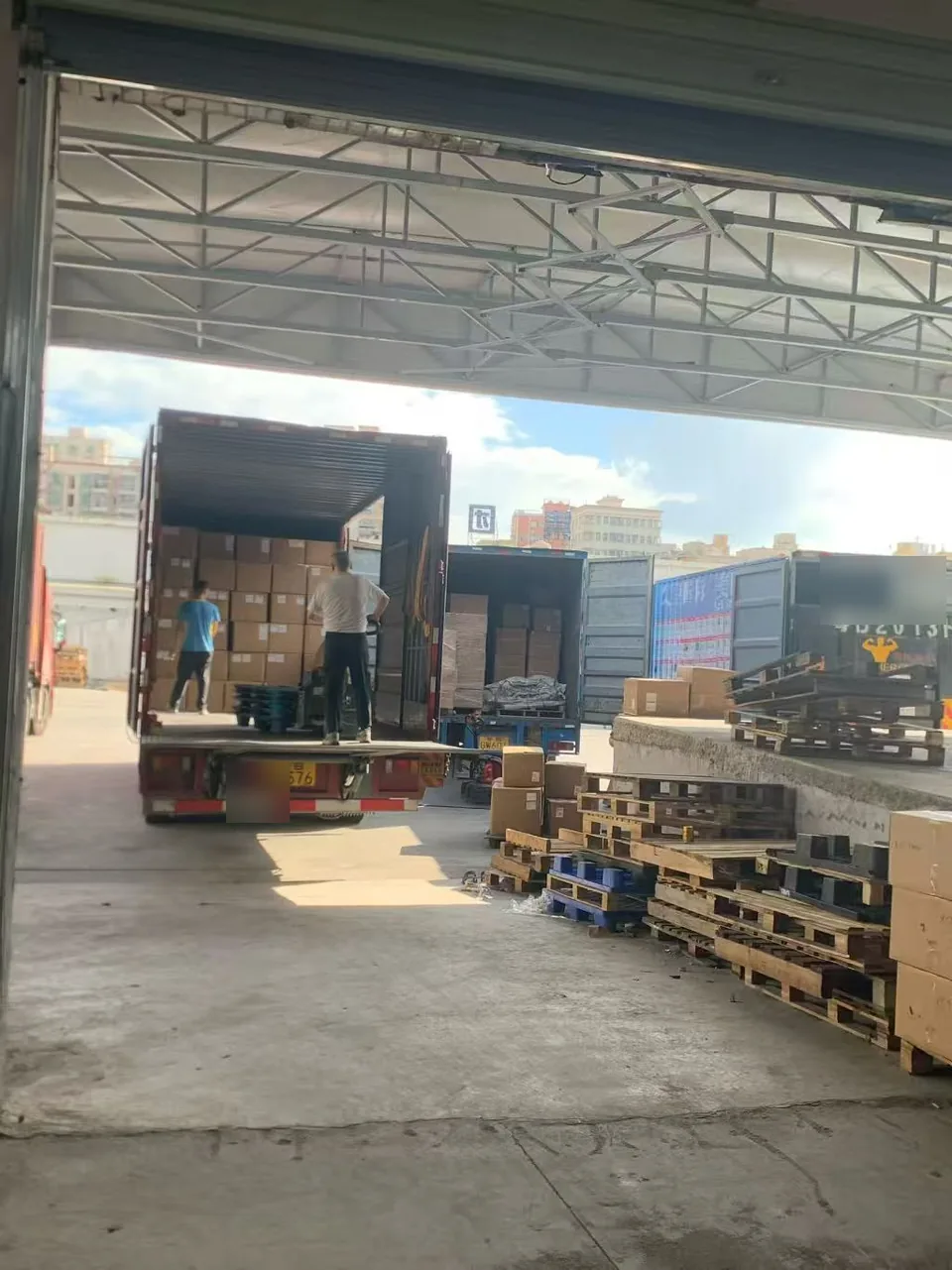
Receiving equipment is the other half. Confirm whether the destination has a dock-height door or a ground-level entrance, whether a forklift with adequate tine length and a pallet jack are available, and whether a tail-lift truck and a timed appointment are needed. A single pallet of cast rotors can exceed a tonne, so get the per-position weight limit in writing and photograph the wrapped pallets at origin.
- Specify the pallet footprint and type in the purchase order, and reject overhanging cartons that would be crushed in transit.
- Set a maximum gross weight per pallet position and mark each pallet with its measured weight.
- Require stretch wrap, corner boards and strapping on heavy lines, plus a rigid top board where cartons are stacked.
- Label every pallet with the SKU list, carton count, gross weight and a stackable or do-not-stack marking.
- Confirm dock height, fork capacity, pallet-jack availability and any tail-lift or appointment requirement in writing.
What does heavy-cargo LCL versus FCL billing show on one identical scope?
On one identical scope, FCL is usually cheaper for dense cast parts because LCL bills on the greater of volume or weight and then adds a de-consolidation step a full container avoids. Both columns describe the same cargo: 8.0 CBM and 12,400 kg of cast-iron brake discs and aluminium housings, from a supplier warehouse in Ningbo to a commercial warehouse near Chicago, in USD on DAP terms under Incoterms 2020, on 2026 planning assumptions. Only the mode changes. See FCL vs LCL shipping for the general break-even.
The decisive line is the ocean freight basis: at 12.4 revenue tonnes against 8.0 CBM the LCL consolidator charges on weight, while the FCL shipper pays a flat per-container amount. FCL avoids the CFS fee but pays higher origin and destination THC, assessed on the whole container. Duties and taxes are excluded from both columns because they depend on classification and the tariff in force at entry; verify the current official notice. All amounts are Illustrative Calculation values, not live rates, so request a current quotation.
| Cost line | Ocean LCL (USD) | Ocean FCL 20ft (USD) | Why it differs |
|---|---|---|---|
| Origin haulage, palletising, THC, documentation | 605 | 620 | FCL pays full-container origin THC; LCL adds CFS handling.5 |
| Ocean freight basis | 1,610 (12.4 W/M t x 130) | 1,480 (flat per 20ft) | LCL bills on weight because 12.4 t exceeds 8.0 CBM |
| Destination THC and wharfage | 210 | 295 | Terminal fees are charged per container, not per pallet |
| De-consolidation versus devanning | 340 | 0 - devanned at your dock | LCL is stripped at a CFS; a full container is unloaded at the warehouse |
| Customs entry, ISF, broker | 260 | 260 | The same entry work applies; ISF is an ocean requirement |
| Inland delivery and appointment | 480 | 520 | FCL adds a chassis and a timed container drop |
| Total, excluding duties and taxes | 3,505 | 3,175 | Illustrative Calculation only; request a current quotation |
Which cost lines are easiest to miss when you compare auto-parts quotes?
A quote showing only an ocean freight rate is not a landed-cost comparison, and the omitted lines are where auto-parts budgets overrun. A landed figure must include origin haulage and palletising, origin THC and documentation, destination THC and wharfage, LCL de-consolidation or FCL devanning, customs entry and broker fees, duties and taxes, inland delivery and a booked appointment, plus storage, demurrage and detention when free time expires. Compare totals under one Incoterm, not per-CBM rates.
Terminal and documentation fees are set by carriers and terminals and revised periodically, so verify the current official notice rather than reuse an old figure; the Shipping cost to the USA breakdown shows where they sit in a door-to-door budget. A delivery appointment, a tail-lift vehicle or a lift-gate charge is often quoted separately. Duties and taxes depend on classification and the tariff in force at entry, and no rate is quoted here.
- Origin haulage from the supplier to the port or CFS is quoted separately and is easy to omit under an ex-works price.
- Origin THC and documentation fees appear on the carrier invoice and change, so confirm the current tariff before booking.
- Destination THC and wharfage are charged at the US port and are higher for a full container than an LCL share.
- LCL de-consolidation and CFS release fees are charged per CBM or pallet and disappear only with FCL devanning.
- Storage, demurrage and detention start when free time expires, and unlabelled pallets that devann slowly are a frequent trigger.
Who does what from supplier readiness to the US warehouse dock?
The process has a fixed sequence, and the handover that matters most happens before loading rather than at arrival. You supply classification and ISF data, the supplier supplies packed and labelled goods, the forwarder books and files, the broker enters, and the consignee receives. Because one purchase order often spans several factories, the consolidation warehouse is where carton counts, SKU numbers and pallet weights are reconciled against the invoice before anything is stuffed.
On the US side, the importer of record keeps classification, valuation, product compliance and record-keeping duties regardless of Incoterm. DDP shifts who pays duties, taxes and clearance charges; it does not remove those obligations. Release cannot be assumed, and tariffs and trade measures change, so verify the current official notice. Where a part could fall under two classifications, request a binding ruling rather than choosing the description that sounds cheaper.1
- The supplier confirms the ready date, packs by SKU, labels each carton and issues a packing list with dimensions and weights.
- You or your broker assign an HTS line to each part family and confirm the importer of record and its IRS or EIN identification.
- The forwarder checks battery, liquid and solid-wood declarations, books LCL or FCL space and issues the shipping instruction.
- The origin warehouse reconciles SKUs against the invoice, repalletises non-conforming loads and records measured CBM and pallet weight.
- The forwarder or its agent files the Importer Security Filing (ISF 10+2) before the vessel is loaded at origin.3
- The container is stuffed, sealed and sailed; on arrival the broker files the entry and the cargo is released after review.
- The consignee books an appointment, devans or collects the pallets, signs with exceptions noted and retains the entry records.
Under DDP the seller pays duties, taxes and clearance charges, but the US importer of record remains responsible for classification, valuation, product compliance and record-keeping. No outcome is assured at the border, and tariff measures change; verify the current official notice before booking.
What should you send your forwarder, and which mistakes delay auto-parts loads?
A usable quote needs a data packet, not a part count: carton dimensions, gross weight, CBM, stackability, pallet footprint, photos, HS codes, ready date, delivery address with access details, Incoterm, and explicit battery, liquid and wood declarations. Most delays trace back to two errors: a packing list describing everything as auto parts, and a pallet heavier than the consignee can lift. Follow the Accurate shipping quote info checklist so your rate is comparable.
Fix both before booking. Ask the supplier for photographs of the wrapped pallet, the strapping and any treatment mark, and confirm the receiving warehouse's equipment in writing. Provide the classification per part family and name the importer of record on the booking form, then request a door-to-door total in USD under one Incoterm.
What to send your forwarder
- Carton dimensions, carton count, gross and net weight, total CBM and pallet positions for each SKU stream.
- Whether each pallet is stackable, its maximum stacked height and its measured gross weight per position.
- Photographs of packed cartons, the wrapped pallet, strapping and any treatment mark on solid-wood packaging.
- The HS code or proposed classification per part family, plus commercial value and currency of each line.
- Supplier ready date, origin pickup address, US delivery address, dock availability and appointment requirements.
- The Incoterm, the importer of record, the purchase order number and the receiving warehouse contact.
Common mistakes and their fixes
- Describing a mixed load as auto parts: replace it with a specific part name and material for every SKU.
- Stacking cast rotors above lamp cartons: enforce a heavy-bottom, fragile-top plan and a no-stack mark.
- Omitting the battery or liquid declaration: add a separate booking line and keep those pallets segregated.
- Using untreated solid-wood crating: require a compliant treatment mark or switch to plywood where accepted.
- Comparing an LCL per-CBM rate with an FCL port-to-port rate: rebuild both as door-to-door totals in USD.