
Shipping Auto Parts from China to the UK: Pallet Shipping, Customs Documents and Delivery
For a heavy, mixed-SKU auto-parts order into Great Britain, ship strapped to ISPM 15 pallets by ocean LCL; loose cartons suit only light replenishments or sites without a forklift. The decisive criterion is total landed cost on one identical scope, because a vague 'auto parts' description drives customs queries and a hand-balled unload inflates the final mile. Fix per-SKU descriptions, commodity codes and receiving equipment before booking, and hold a GB EORI with a named importer of record; even DDP leaves classification and compliance with you. All figures are Planning Examples, not live rates.
- Decide palletised vs loose cartons on the total landed cost of one identical order (same 148 cartons, same DAP terms, USD), never on the ocean rate alone.
- Write a precise, per-SKU goods description and confirm each commodity code before arrival; a vague 'auto parts' line is the most common trigger for a customs query.2
- Use ISPM 15-marked wooden pallets and declare them on the packing list, because non-compliant wood packaging can be held at the border.
- Confirm the receiving equipment, forklift, pallet truck, loading bay or tail-lift, before booking, since a hand-balled unload is billed as an accessorial.
- A GB EORI and a named importer of record are required before arrival, and DDP does not remove your classification, product-compliance or record-keeping duties.3
On this page
Should you ship heavy auto parts palletised or as loose cartons?
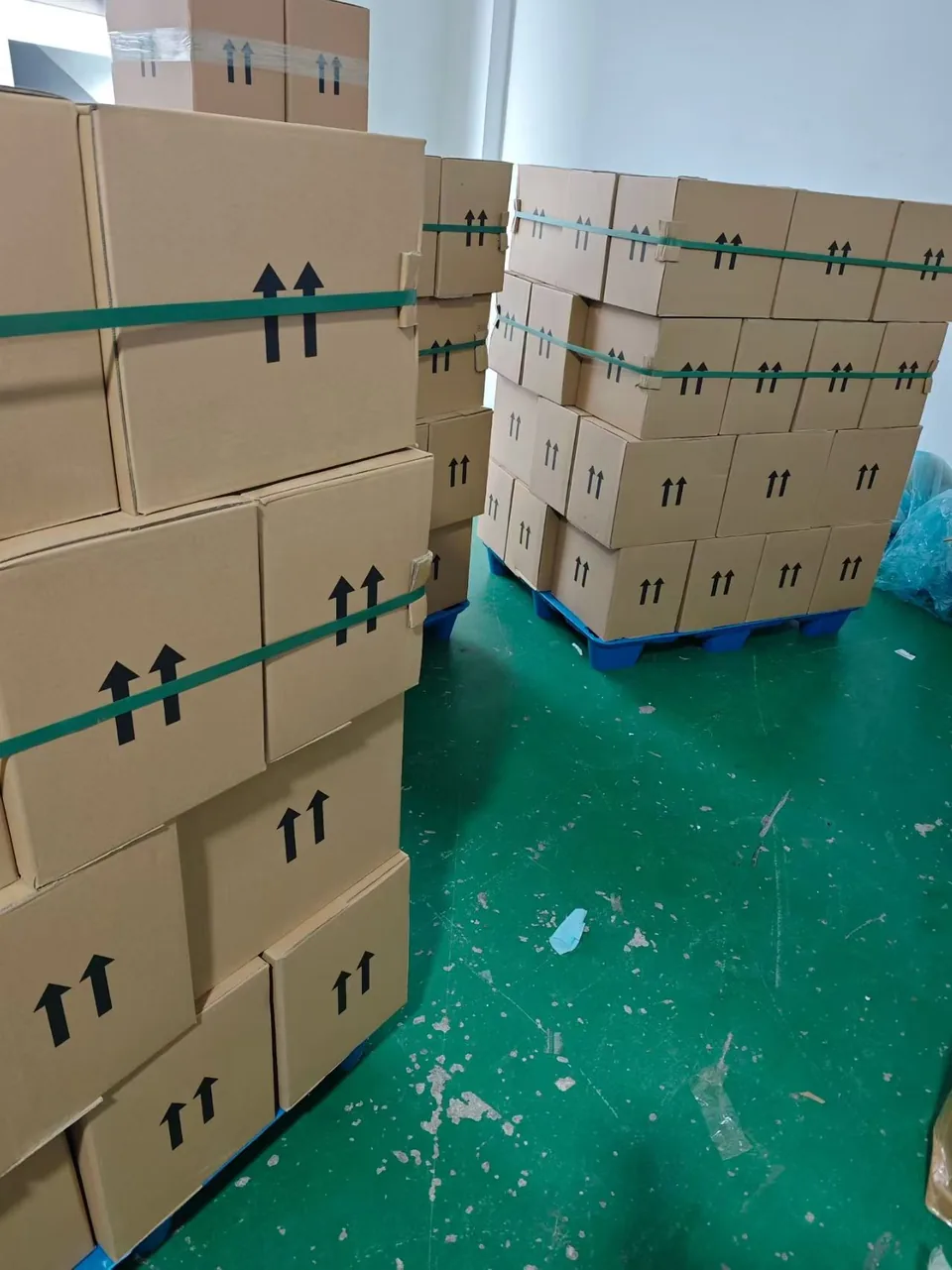
Ship heavy, mixed-SKU auto parts strapped to marked wooden pallets by ocean LCL in almost every case. Palletising turns 148 loose cartons into six units a forklift can load and receive in one pass, cutting damage and reconciliation errors. Loose cartons suit only light replenishments or a site with no loading bay. Solid-wood pallets must carry the ISPM 15 mark or the consignment can be held at the border.4 Check the volume with a CBM calculator.
Hold one scope constant. Table 2 prices a single mixed order of 6.8 CBM, 3,420 kg and 148 cartons, from a Ningbo supplier warehouse to a warehouse near Manchester, USD on DAP terms, 2026 planning assumptions, you as importer of record under a GB EORI. Column A uses six ISPM 15 pallets; Column B loose-loads the same cartons into the same LCL consolidation. Both are Illustrative Calculations; a live rate must be quoted.
How does a distributor's order pattern change the mode you should book?
The typical buyer is an aftermarket distributor, motor factor or workshop group consolidating a mixed replenishment order, not a single-part importer. They buy dozens of part numbers in uneven quantities, dense brake discs alongside bulky painted panels and small sensors. The stake is continuity: one mis-described line holds the whole consignment and stops a workshop bay. Repeat monthly orders justify a standing LCL slot; a one-off fill favours FCL once volume allows, as FCL vs LCL Shipping explains.
That mix is why palletising and precise descriptions matter more here than for a uniform product. A 148-carton order with 40 SKUs gives customs and the warehouse 40 chances to find a mismatch between invoice, packing list and physical marks. Decide early whether the address can take six pallets in one slot. If it cannot, loose cartons are a deliberate trade of higher handling cost for a smaller vehicle.
How do you write precise goods descriptions for a mixed-SKU order?
Write one line per part family on the invoice and packing list, never a single 'auto parts' line. A defensible description names part, material, function and part number, for example 'brake disc, cast iron, front axle, part no. 4312, 240 units'. That lets your broker assign the right commodity code and the warehouse reconcile cartons; see HS Code Basics. Vague descriptions are the top trigger for a customs query, so confirm each code on the official tariff.2
Split a mixed master carton into component lines rather than one code, and cross-reference each line to the supplier's part-number list. Note parts with an electrical or safety-critical role separately so classification and any marking check are done line by line. Keep a photograph of each carton's marks with the packing list to resolve discrepancies without opening the whole consignment.
| SKU / part family | Precise description for invoice & packing list | Classification & marking consideration | Documents & declarations to prepare |
|---|---|---|---|
| Brake discs, drums (dense, heavy) | Cast-iron brake disc, front axle, part no., unit count | Brake-system commodity code; check any product rule | Invoice, packing list, supplier part-number list, origin evidence |
| Suspension arms, control arms | Forged-steel control arm, left/right, part no. | Steel-part code; note vehicle fitment on the line | Invoice, part-number cross-reference, material declaration |
| Body panels, bumpers (bulky, painted) | Moulded PP bumper cover, painted, part no. | Plastic-part code; record finish and fragile handling | Invoice, photos of painted surface, damage notes |
| Filters, service consumables | Spin-on oil filter, steel housing, part no. | Filter code; confirm replacement-part status | Invoice, packing list, quantity per master carton |
| Sensors, ECU modules (electrical) | Wheel-speed sensor, 12 V, part no. | Electrical or EMC rule may apply; verify guidance | Supplier declaration, any test evidence, marking record |
Which customs documents must be ready before the vessel arrives?
Have the commercial invoice, a line-item packing list, the bill of lading, commodity codes and a GB EORI ready before sailing, because the import declaration is built from these. Your broker lodges the entry, but you remain importer of record and answerable for accuracy.3 Follow the official step-by-step import process from classification and valuation through declaration to accounting for duty and tax, then release; see Customs Clearance Steps.
Assign one owner to each document at booking. The supplier provides the invoice, per-SKU packing list, part-number cross-reference and material declarations; the forwarder provides the bill of lading and export filing; you or your broker provide the EORI, entry data and duty or VAT route. A packing list arriving after the vessel is the most avoidable cause of terminal storage, so set the document deadline against the goods-ready date.
- Supplier confirms per-carton dimensions, gross weight, total CBM, pallet count and the goods-ready date.
- You or your broker fix a commodity code and a precise goods description for every SKU line.
- Supplier issues the commercial invoice and a line-item packing list with part numbers and wood declarations.
- Forwarder collects the goods, unitises pallets or loose-loads the LCL, and files the export declaration.
- Carrier issues the bill of lading and the vessel sails port-to-port toward the named UK port.
- Before arrival, the broker lodges the import declaration under your GB EORI.
- Handling, de-consolidation and clearance complete; duty and import VAT are accounted for and a slot is booked.
Where does the UKCA/CE boundary sit for auto parts?
Treat UKCA and CE as a product-by-product question, not a blanket rule. UKCA is the conformity marking for the Great Britain market, while CE is the EU marking; whether a part needs either, both or neither depends on the specific regulations it falls under, and the accepted use of CE on the GB market has been subject to changing guidance.1 Verify the current official notice per part family before placing goods on the market.
Separate parts that clearly fall under a marking regime from ordinary mechanical components, and keep the supplier's declaration or test evidence with the entry documents. This is an importer responsibility: even where a seller handles clearance, you must show the compliance position was checked. Ask for a written statement of which parts carry which marking and file it with the invoice.
Do not carry a UKCA or CE assumption from an earlier shipment into a new one. Confirm the current official guidance for each part family before booking and keep the supplier's marking declaration on file. Product compliance remains the importer's duty even when a seller clears customs under DDP.
What does the freight quote include, and what is commonly excluded?
Read a quote as a list of lines, not one door-to-door number. A bare LCL ocean rate covers the port-to-port leg and little else; commonly missed charges are origin haulage and export documentation, origin THC and the documentation fee, destination THC and port charges, LCL de-consolidation, customs entry and brokerage, inland delivery, and the booked slot or tail-lift. Ask for a written quotation marking each line included, excluded or 'estimated, to be confirmed', with the Incoterm, currency and validity date.
Keep duty and import VAT out of the freight comparison, because they depend on the commodity code and import-value basis rather than the mode; verify the current rate and your accounting route separately on the official tariff. Planning Example: a quote reading 'ocean freight USD 950' for 6.8 CBM covers the sea leg only, with destination charges, de-consolidation and final mile billed separately. Confirm live rates and the current terminal schedule before treating any number as fixed.
- Origin haulage from the supplier and the export documentation fee.
- Origin terminal handling charge and any terminal security or documentation fee.
- LCL de-consolidation or CFS unpack, charged per cubic metre or per consignment.
- Customs entry, brokerage and any examination or inspection fee.
- Inland haulage from the port or CFS to the final UK delivery address.
- Booked slot, tail-lift, two-person crew, waiting time and re-delivery.
- Port storage or demurrage if clearance or collection slips past the free time.
How do palletised and loose-carton shipping compare on one identical scope?
Fix the scope, then let the numbers decide. The table prices one identical order, 6.8 CBM of goods, 3,420 kg, 148 cartons, Ningbo supplier to a warehouse near Manchester, USD, DAP terms, 2026 planning assumptions, you as importer of record with a GB EORI. Column A uses six ISPM 15 pallets; Column B loose-loads the same 148 cartons. Both move the same parts to the same door under the same trade term, so any difference is the packing method.
Two cautions keep the comparison honest. Duties and import VAT are left out of both columns because they depend on the commodity code, not the packing method, and every figure is an Illustrative Calculation with a live rate to be quoted. The cheaper palletised total assumes one successful forklift unload and no damage; a loose order hand-balled into a site with no bay can reverse the result.
| Cost line (Illustrative, USD) | Palletised (6 ISPM 15 pallets) | Loose cartons (148 pieces) | What differs |
|---|---|---|---|
| Packing & unitisation materials | $185 (pallets, straps, wrap) | $70 (cartons only) | Pallets add ~0.45 CBM of billed footprint |
| Chargeable LCL volume (port-to-port) | 7.3 CBM (goods + pallets) | 6.8 CBM (goods only) | Overhang and void space are billed |
| Ocean freight, LCL (port-to-port) | $1,020 | $950 | Priced per chargeable CBM on one sailing |
| Origin loading + export documentation | $240 (forklift, 6 units) | $410 (hand-load, 148 counts) | Piece count and labour dominate loose |
| Destination THC + de-consolidation + sort | $355 | $480 | Loose needs manual SKU reconciliation |
| Final delivery + unload | $430 (forklift / pallet truck) | $690 (hand-ball, two-person crew) | Receiving equipment sets the cost |
| Total landed logistics cost | $2,230 | $2,600 | Palletised wins on this identical scope |
How should you plan transit, receiving equipment and the booked delivery slot?
Plan the timeline from the supplier's goods-ready date, not the vessel ETA. On a Ningbo to Felixstowe routing, allow roughly 30-40 days port-to-port and 40-55 days door-to-door from the Ningbo supplier warehouse as planning estimates, then add clearance, LCL de-consolidation and the booked slot; confirm the current schedule with the carrier. Free-storage time starts once the container is unpacked, so book the slot a week ahead. Build that buffer into your Ocean Freight plan.
Survey the receiving site before choosing the packing method. A commercial warehouse with a loading bay, forklift and pallet truck takes six pallets in one visit at predictable cost; a workshop with narrow access or no lift may need a tail-lift truck and two-person crew, billed as accessorials. Confirm receiving hours, who signs, and whether damage is noted on the delivery note, since signing clean weakens a later claim. Where a pallet will not fit, loose cartons are the fallback.
What should you send your forwarder, and how do you handle exceptions?
A usable quote depends on the data you send: the commercial invoice, a packing list with per-carton dimensions and weights plus total CBM, the pallet count and stackability, per-SKU commodity codes or precise descriptions, the ready date, exact delivery address and access notes, the Incoterm, and any wood, battery, fluid or material declarations. With that pack two forwarders return comparable quotes; without it the cheapest number is meaningless.
Plan the exceptions, because mixed-SKU orders generate them. A shortage, damaged pallet, crushed carton or mis-described line must be photographed, noted on the delivery note and reported before the carrier leaves, then reconciled line by line. An examination or missing document adds days, so keep a contingency and never treat clearance as certain. The costliest mistakes are comparing a port-to-port rate with a door-to-door number, forgetting DDP still leaves compliance with you, and reading the ETA as the delivery date.
- Commercial invoice with accurate value, currency and full supplier and consignee details.
- Line-item packing list with per-carton dimensions, gross weight, CBM, stackability and pallet count.
- Commodity codes or precise per-SKU descriptions, plus a part-number cross-reference.
- Supplier goods-ready date and the required delivery window at the UK address.
- Exact delivery address, loading-bay or lift details, and any forklift, tail-lift or crew needs.
- Chosen Incoterm, preferred mode, GB EORI status, and wood, battery, fluid or material declarations.
Never set a port-to-port LCL rate against a door-to-door number, and never treat the vessel ETA as your delivery date. Clearance, de-consolidation and the booked slot add days and cost; no timeline is guaranteed, so confirm the current schedule with the carrier and keep a contingency.