
Shipping Beauty & Personal-Care Tools from China to Germany: Consolidating After the Canton Fair
Consolidate your Canton Fair beauty-tool orders into one Germany-bound LCL or FCL shipment after the fair to spread fixed costs across all your suppliers instead of paying them per parcel. Budget for CE marking, EU customs entry (EORI plus an Access2Markets HTS and duty check), and — for any device with a battery or electronics — WEEE, CE and battery obligations. Choose the mode by total cube across suppliers: under roughly 10–15 CBM, LCL usually wins; above it, FCL. Plan the consolidate → sail → clear → deliver milestones, then collect HS codes and confirm CE and battery status per SKU.
- Consolidation cuts per-shipment fixed costs, but only if every supplier's goods meet the same CFS cut-off and share one consolidated manifest.
- Mode follows total cube across suppliers: LCL below roughly 10–15 CBM, FCL above it, and air only for urgent post-fair samples.
- CE marking and EU customs entry — EORI, HTS classification and duty via Access2Markets — are the importer's responsibility, not the supplier's.1
- Any device with a battery or electronics adds WEEE, battery and CE-electronics duties that survive a DDP quote.5
- A consolidated manifest carrying HS codes and compliance status per SKU is what prevents clearance delays at Hamburg.
On this page
Why consolidate your Canton Fair beauty-tool orders before shipping to Germany
You come away from the Canton Fair with samples and first orders spread across five, ten or twenty suppliers — tweezers from one booth, mirrors from another, brushes, manicure sets, and a few small electrical devices such as heated lash curlers or USB nail files. Shipping each supplier's cartons separately means paying origin cartage, terminal handling, documentation, de-consolidation and a customs entry for every parcel. Consolidating them into one Germany-bound LCL or FCL after the fair spreads those fixed costs once across the whole order, so the per-SKU landed cost drops even though the goods come from many factories.
Consolidation only pays off as planned if the goods actually travel together. That means every supplier's cartons must reach the same consolidation warehouse, pass the same CFS cut-off, and be listed on one consolidated manifest with HS codes and compliance status per line. If two suppliers miss the cut-off and ship a week apart, you have two shipments and two sets of fixed costs again. Treat the consolidation window as a hard deadline agreed with your forwarder before you leave the fair, and brief each supplier on the collection address and ready date.
The figure below shows the cost logic of consolidation on one identical scope. Hold the detail for the later section; the point here is that the saving is structural — it comes from removing duplicated fixed lines, not from a cheaper ocean rate.6 Plan the move as a single project with one owner, one Incoterm and one delivery address, and the fair's scattered orders become one manageable Germany-bound shipment.
LCL, FCL or air: which mode fits a post-fair consolidation
Pick the mode from the total cube across all your fair suppliers, not from any single supplier's volume. Ocean LCL is the default for a mixed batch because you pay only for the CBM you use and still consolidate many small suppliers into one container. Ocean FCL wins once the combined cube reaches roughly 15 CBM or when fragile mirrors and glass items need a sealed box with no co-loaded cargo. Air freight is reserved for urgent phase-one samples or a shortfall you must land before a launch, and it costs several times the ocean rate per CBM.
Read the Incoterm before you compare, because it changes what each quote includes. A DAP quote leaves German import clearance and delivery to you; a CIF quote covers only port-to-port ocean and hides the inland, terminal and customs steps you still pay. Always request the same Incoterm and the same scope so the numbers are comparable, and review the LCL vs FCL total cost guide before you finalise terms.6 The table below lines up all three modes on one identical post-fair scope.
| Mode | Scope | Planning cost USD | Transit planning | Use when |
|---|---|---|---|---|
| Ocean LCL | Shenzhen/Yantian to Hamburg port, then truck to Hamburg warehouse | 1,350 | 30–36 days port-to-port; 38–46 days door-to-door | Full mixed batch, lowest cost per CBM |
| Ocean FCL (20GP) | Whole container, same door-to-door scope | 2,450 | 30–36 days port-to-port; 38–46 days door-to-door | Cube above ~15 CBM or fragile glass items |
| Air freight | SZX to FRA airport, plus trucking both ends | 5,200 | 3–6 days airport-to-airport; 7–12 days door-to-door | Urgent samples under ~2 CBM, fill-ins |
All three rows cover the same 12 CBM, ~1,100 kg scope on DAP terms. Live rates move with fuel and capacity, so request a current quote on the identical scope before booking.
Chargeable CBM and weight: how mixed small goods are rated
Beauty tools are a mixed-weight puzzle: a carton of tweezers is dense and heavy for its size, while a carton of mirrors or brush sets is large and light. Ocean LCL is rated weight-or-measure, meaning the carrier bills the greater of actual weight and chargeable volume, with 1 CBM commonly treated as 1,000 kg. The mirror cartons can therefore cost more than their scale weight suggests, and the tweezer cartons less. You cannot know which mode is cheaper until you total the chargeable CBM across every supplier.
Measure cube from packed cartons, not catalogue sizes, because protective foam and double-wall boxes add volume that changes the LCL rate and the container plan. Run the real dimensions through the CBM calculator, then add the gross weight so your forwarder can quote the right mode. The tipping point between LCL and FCL is a chargeable-volume crossover, not a weight threshold, so the cube number is the single figure that decides the plan.
When weight, not volume, drives the rate
If your fair order skews to dense metal tools — stainless tweezers, manicure scissors, nail clippers — the shipment may bill on weight rather than volume. Tell your forwarder the full weight-and-measure picture per supplier so the comparison stays honest and no carton is quietly re-rated at origin.
Classify every SKU and check duty with Access2Markets
Each beauty-tool line sits under its own HS heading, and the duty follows the code, not the product name. Tweezers, mirrors, hair brushes, electric manicure devices and battery-powered tools are classified separately, so a single 'beauty tools' description on the invoice is wrong and will be re-classified by customs. Classify each SKU before you leave the fair so the commercial invoice, packing list and consolidated manifest all agree.
Use Access2Markets to confirm the EU duty rate, any import controls and the product requirements that attach to each HS code, because the official portal is the reference German customs expects.1 A mismatch between the declared description and the physical goods is a leading cause of clearance delay, and the importer answers for it. Build the duty line into your landed-cost model per code, and keep the classification evidence with the shipment file so the broker can release on the first attempt rather than after correction loops that cost storage days.
EORI and EU customs entry for a German import
A non-EU business needs an EORI number to file the EU import entry, and Germany enforces this tightly at arrival. Obtain the EORI before the vessel sails so clearance is not blocked at the port; a missing number stops the entry and the whole consolidated batch sits in storage accruing charges.2 Share the EORI with your German broker when you book, alongside the consolidated manifest and the per-SKU HS codes, so the entry can be prepared in advance.
The customs workflow for a consolidated beauty-tools load is entry, duty and import VAT payment, then release — a one-time event that grants the goods union status for free movement inside the EU. Review the customs clearance steps so your broker files the right paperwork at each stage and the consolidated manifest matches the physical cartons exactly. The Union Customs Code is the framework behind these procedures, so verify the current official notice before booking because formalities are revised.2
CE marking and, for devices, WEEE, batteries and electronics compliance
CE marking is the importer's responsibility in the EU, and Germany checks it closely. As the importer of record you must confirm the products carry valid CE marking, hold the declaration of conformity and the technical file, and be ready to show them to market surveillance. Buying on a supplier's word is not enough; verify the documents before the goods leave China, because a non-compliant line can be stopped at the border or recalled after sale.3
Beauty tools split into two compliance groups. Manual items — tweezers, mirrors, plain brushes, non-powered manicure tools — generally need only the correct CE where a directive applies and accurate labelling. Small electrical devices such as heated curlers, LED mirrors, sonic cleansing brushes or USB nail files add layers: they fall under WEEE producer responsibility, so you must register, report tonnage and finance take-back and recycling, and this duty does not disappear under a DDP quote.4 A DDP term only changes who prepays; the importer of record still owns classification, compliance and record-keeping.
Battery and Batteries Regulation duties for powered tools
Any device with a lithium cell or battery — a rechargeable lash curler, a USB file, an LED mirror with a coin cell — triggers battery obligations under the EU Batteries Regulation, including carbon-footprint, labelling, passport and EPR duties that phase in over time.5 Obtain the UN38.3 test summary and the battery packing declaration from the supplier before booking, and check the current official notice for the obligations applying to your shipment date. Mis-declaring a battery device as battery-free is the fastest route to origin rejection or arrival penalties.
Keep the compliance file with the manifest
Tie each device SKU to its CE file, WEEE category and battery status on the consolidated manifest. A broker who can see, per line, whether a carton is manual, CE-electrical, or battery-powered clears the batch faster and avoids a partial hold that strands compliant goods alongside a flagged one.
Packaging mixed small goods for a shared container
A consolidated beauty-tools load is a mix of shapes and fragilities: glass mirrors next to dense metal tweezers, brush sets next to small cartons of electrical devices. Specify packaging in the purchase order, not at the warehouse door. Double-wall cartons, internal dividers for mirrors, edge boards and strap-packing keep the stack stable and stop point-load cracking; desiccant in the carton protects metal finishes against container condensation on a long ocean leg.
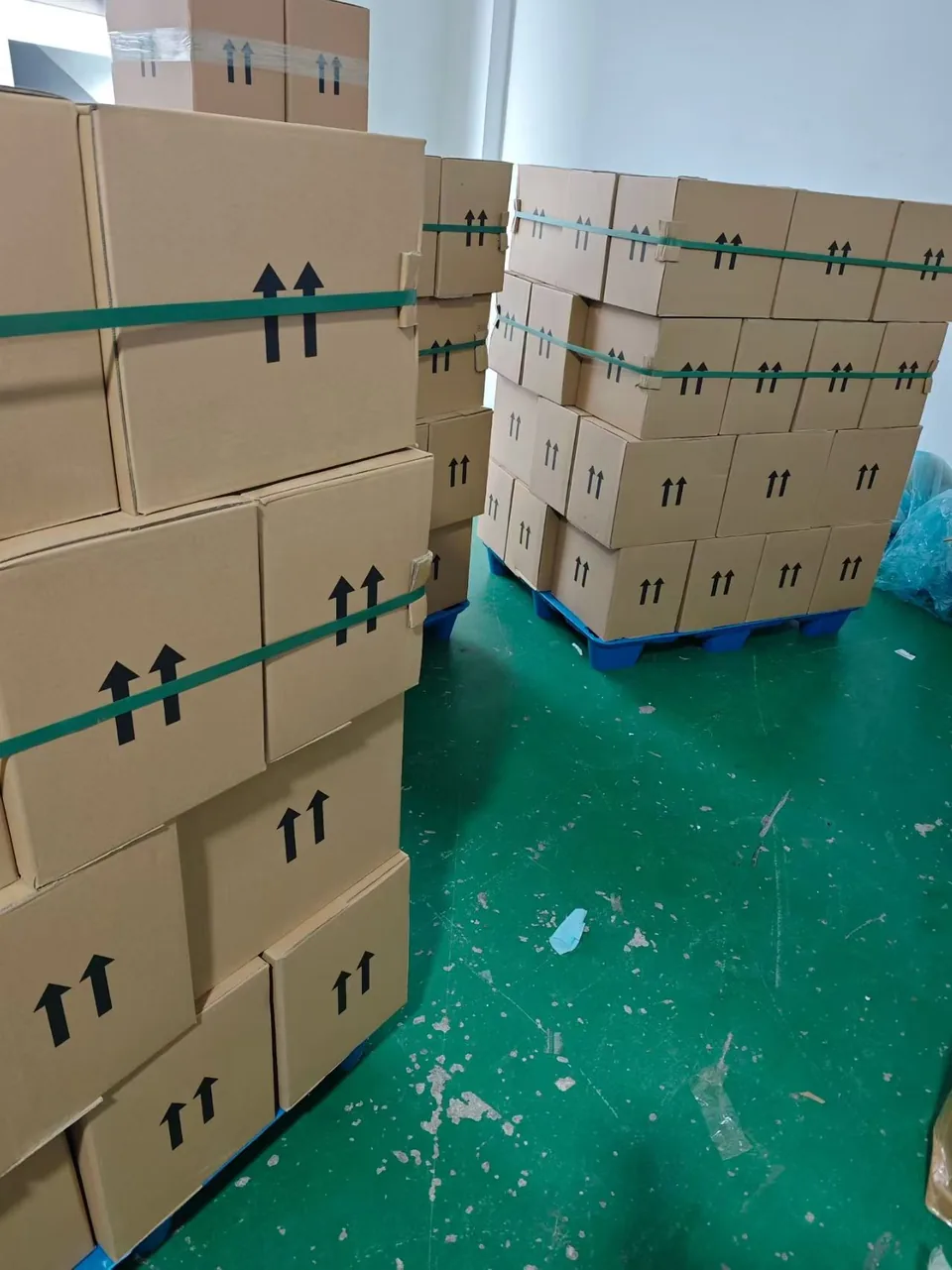
Palletise for the CFS, because your cartons are handled beside other shippers' freight and loose cartons crush and mis-sort. Mark this-side-up and no-top-load on mirror cartons, and keep battery-device cartons identifiable so they are not stacked where temperature or pressure rules would breach their transport conditions. Photograph the packed cartons and pallet build so the forwarder can plan unit loads and the broker can confirm the manifest matches what arrives.
A consolidation timeline from fair close to German delivery
Frame the timeline as a planning goal, not a guarantee: sailing schedules, clearance and final-mile windows shift with capacity and season, so confirm the current schedule with the carrier before you promise a date. The sequence is the same on any Incoterm: collect supplier cartons at the consolidation warehouse, confirm the CFS cut-off, export-clear in China, sail, arrive, file the German import entry, pay duty and VAT, then deliver to the Hamburg warehouse.6
The Illustrative Calculation below shows why consolidation beats separate bookings on one identical 9 CBM scope. The same volume costs more as two LCL shipments because duplicated fixed lines — two cartage runs, two document sets, two de-consolidations, two entries — reappear. Consolidating removes one of each. Every figure is a planning example, not a live rate; request a current quote on the same Incoterm before booking.
- At fair close, agree the consolidation cut-off and collection address with your forwarder; brief every supplier.
- Suppliers deliver packed cartons to the consolidation warehouse; you receive dimensions, weights, HS codes and compliance files.
- Forwarder builds one consolidated manifest and books the LCL or FCL slot on a stated Incoterm.
- Cargo is export-cleared in China, loaded, and the vessel sails on the confirmed schedule.
- On arrival at Hamburg, your broker files the import entry using the EORI and consolidated manifest.2
- Pay duty and import VAT, obtain release, and deliver to the warehouse against the packing list.
| Cost line | Two separate LCL (USD) | One consolidated LCL (USD) | Difference driver |
|---|---|---|---|
| Origin cartage (two pickups vs one) | 420 | 240 | One collection run |
| Origin THC and documentation (two bills vs one) | 360 | 220 | One document set |
| Ocean freight, 9 CBM port-to-port | 980 | 980 | Same volume moved |
| Destination THC and wharfage | 300 | 300 | Same at arrival |
| CFS de-consolidation (two lots vs one) | 520 | 280 | One strip at CFS |
| Customs broker and import entry | 320 | 260 | One entry, one manifest |
| Inland delivery to Hamburg warehouse | 320 | 320 | Same final mile |
| Total, duties and VAT excluded | 3,220 | 2,600 | Consolidation saves ~620 |
What to send your forwarder for an accurate quote
Send one complete data pack, because a quote built on estimates is revised upward at the destination. The forwarder can only price chargeable CBM, choose the mode, file the entry and plan delivery when carton detail, HS codes and compliance status arrive together. Anything missing reappears as a de-consolidation surprise, a misclassification or a failed delivery. Ask for packed dimensions after cartons are sealed, not catalogue sizes, because protective packaging changes the cube.
- Packed carton dimensions per SKU, carton count and total gross weight in kilograms.
- Total and per-carton chargeable CBM, and whether weight or volume drives the rate.
- Stackability notes: no-top-load mirror cartons, maximum safe stack height, fragile lines.
- Six-digit HS code and product description per SKU, matching the commercial invoice exactly.
- CE marking status, WEEE category for devices, and battery/UN38.3 status for powered tools.345
- Supplier ready dates and the consolidation warehouse collection address and cut-off.
- Stated Incoterm, exact delivery address, dock or liftgate access, receiving hours and contact.
- Photos of packed cartons, pallet build and any battery or CE marks for the carrier's check.
Common mistakes when consolidating beauty tools after the fair
Most consolidation problems are quoting and compliance errors made before the cargo moves, not carrier failures. Lock the data pack, the packaging spec and the declarations at the purchase-order stage and re-confirm them at the ready date. The issues below each have a cheap fix at booking and an expensive one at the destination.
- Forgetting CE and battery rules: verify CE per SKU and obtain UN38.3 and battery declarations for powered tools before booking.35
- Mixing suppliers without a consolidated manifest: each line needs HS code, value and compliance status, or clearance stalls.
- Letting suppliers miss the CFS cut-off: two late booths become two shipments and two sets of fixed costs.
- Quoting LCL and FCL on different scopes or Incoterms, hiding the real crossover volume.
- Assuming DDP removes WEEE and battery EPR from the importer of record.4
- Omitting destination terminal, de-consolidation and delivery access fees from the landed-cost build.
Do not compare a port-to-port ocean quote with a door-to-door air quote; the missing inland, terminal and clearance steps surface as surprise charges at arrival. Compare on one identical scope and Incoterm.6