
Shipping Consumer Electronics from China to the Netherlands: Hitting a 2-Week Express Window
For a 2-week express window from China to the Netherlands, air freight is the mode that fits: airport-to-airport transit is typically three to seven days plus clearance and delivery, while even fast ocean rarely lands port-to-port inside two weeks. Before booking, obtain an EORI for the EU declarant, confirm CE marking and WEEE registration for electronics, and if lithium batteries are present meet UN38.3 and IATA DGR air rules. Plan a tight timeline with buffer at customs, then request a same-scope quote and confirm current rates.
- Air freight, not fast ocean, is what normally fits a 2-week China-to-Netherlands window because airport-to-airport is three to seven days plus clearance, while ocean rarely lands port-to-port inside 14 days.
- A non-EU declarant still needs an EORI to lodge the ENS and import entry, and the number must match the invoice importer or the Dutch release holds.
- Electronics need CE marking with a valid declaration and WEEE producer registration before they enter the Netherlands, or a compliance check stops the release and kills the window.
- Lithium batteries by air require UN38.3 testing and IATA DGR packing and marks; missing or wrong battery status is the fastest way to be refused at the Chinese terminal.
- Quote all modes on the same scope, currency and Incoterm, and put the schedule buffer at the customs step, because that is the part you control least in a 2-week plan.
On this page
Air or fast ocean: which mode actually hits a 2-week window?
A two-week express window from China to the Netherlands is tight enough that the mode choice is the single decision that makes or breaks the plan. Ocean freight, even the fastest sailings, rarely lands port-to-port inside two weeks once you add origin cartage, export clearance, the sea leg, EU import entry and final delivery; a 14-day door-to-door ocean plan is possible only on the very fastest direct loops and still leaves almost no buffer for a hold or a weather delay. Air freight is the mode that naturally fits the window: airport-to-airport transit from a major Chinese hub to Amsterdam Schiphol or a nearby EU gateway is typically three to seven days, and the remaining days absorb export clearance, import entry, any inspection and last-mile delivery across the Netherlands.
The trade-off is cost and battery restriction. Air is priced on a volumetric divisor of roughly one CBM to 167 kg, so a high-cube electronics mix can be charged on volume you would never pay for by ocean, and loose or poorly declared lithium cells can be refused at the terminal. For a 2-week target the default answer is air, with fast ocean kept only as a fallback when the cargo is too large or too battery-heavy for the hold and two weeks can genuinely be met port-to-port. Decide the mode before you quote, because the comparison only works on the same scope.
| Factor | Air (express plan) | Fast ocean (best case) |
|---|---|---|
| Door-to-door planning transit | 9 – 14 days | 13 – 21 days |
| Airport / port-to-port leg | 3 – 7 days | 11 – 18 days |
| Chargeable basis | Volumetric, 1 CBM ≈ 167 kg | Weight-or-measure, 1 CBM ≈ 1,000 kg |
| Illustrative door-to-door cost (EUR) | €3,800 – €5,500 | €1,400 – €2,300 |
| Fit for a 2-week window | Usually yes, with buffer | Only fastest direct loops |
| Main risk to the window | Battery hold, space | Transit overruns, weather |
Table 1 is a Planning Example comparing air and fast ocean on one identical 500 kg / 3 CBM scope, EUR and CPT terms. Airport-to-airport, port-to-port and door-to-door figures are planning estimates, not quotations; confirm the current schedule and rates before booking.
Building the time budget and the Union Customs Code entry
Treat the 14 days as a chain of independent steps, not one number, because each step has its own delay that adds up. The airport-to-airport flight is the shortest and most predictable part, typically three to seven days once consolidation, the main-haul flight and de-consolidation at the Dutch gateway are included; express products compress this further but at a premium. The hidden time sits at the ends: export clearance at origin, the EU import entry under the Union Customs Code at destination, any inspection, and the road leg into the Netherlands. A schedule that assumes the flight is the whole job will overrun the moment one end step slips.
A realistic split for a 2-week air plan is roughly three to seven days airborne, two to four days at origin handling and export clearance, and three to six days for EU import entry, delivery and access. The entry is made under the Union Customs Code, the unified framework applying across the EU since 1 May 2016, which governs release for free circulation, the declaration format and the timing around arrival; your Dutch declarant submits it, secures duty and VAT where due, and the goods release once customs accepts. File as close to arrival as the system allows and pre-stage documents, because the release step is where two-week schedules live or die, and keep the invoice, packing list, CN codes, origin, value and EORI consistent across the ENS, declaration and manifest so a mismatch never triggers a query the tight air plan cannot absorb.
Set up your EU import identity before the cargo flies: EORI
Before any cargo is booked, the party lodging the EU import declaration needs an EORI number. EORI is the Economic Operators Registration and Identification scheme, and a non-EU declarant also needs an EORI to lodge declarations or an Entry Summary Declaration in the EU, with only one valid number per legal person. If your Netherlands consignee or your own Dutch entity does not yet have one, apply early, because the number is checked at every declaration and ENS filing and a missing or wrong EORI stops the entry before the goods move.2
For a non-EU shipper, the practical path is to have your Dutch importer or a Netherlands-based customs representative hold the EORI, or obtain one for your own entity if you act as declarant. Confirm the number is live and matches the legal name on the invoice before the flight, because a mismatch between the EORI holder and the declared importer is a frequent cause of entry holds that eat into the two-week buffer. Put the EORI on the quote checklist and verify it with the CN codes and battery status.2
Look up tariffs and product requirements with Access2Markets
Duties and product requirements for electronics are found per commodity code, so the first planning task after mode is to look up the right heading. The European Commission's Access2Markets portal is the official source for EU tariffs, rules of origin, import formalities and product requirements, and you should use it to confirm the duty rate and any additional measures or documentation attached to your specific electronics CN code before you quote.1
Electronics such as phones, audio gear, adapters and small appliances sit across several CN headings, and the rate depends on the exact subheading rather than the word electronics. Access2Markets also flags product requirements like CE, documentation and any restriction, so pull the heading, the rate and the requirement list together and hand them to your broker with the invoice values. Tariffs and measures change, so confirm the current edition before booking and again at entry, and keep the result with the shipment file so the declaration and the quote agree.1
VAT on low-value consignments: the 22 EUR exemption is gone
For low-value consignments the VAT rule that mattered most changed on 1 July 2021: the former 22 EUR VAT exemption on small consignments was removed, and now consignments not exceeding 150 EUR are handled through the Import One-Stop Shop, IOSS, or special arrangements, while all consignments require a declaration and VAT where due. If your electronics shipment is a single low-value parcel-scope consignment under 150 EUR, IOSS lets the VAT be collected at the point of sale and declared once, which keeps the Dutch border step light.3
Most B2B electronics express loads exceed 150 EUR and are instead declared and VAT-accounted through the normal import entry, often under the importer's VAT number rather than IOSS. Either way the 22 EUR exemption no longer exists, so never plan a VAT-free small-shipment assumption; confirm the value threshold and the correct VAT route with your broker and state it in the quote, because a surprise VAT query at the border is the kind of hold that destroys a 2-week schedule.3
CE marking and WEEE EPR compliance for electronics
Electronics placed on the EU market must carry valid CE marking, and the responsibility chain is strict: the manufacturer signs the EU declaration of conformity and the importer must verify that only compliant CE-marked goods enter the European Economic Area. For consumer electronics this means the product, the documentation and the technical file must support the CE marking before the goods fly, because Dutch customs and market surveillance can question non-compliant goods at the border and during the post-import traceability window.4
On top of CE, electrical and electronic equipment falls under WEEE producer responsibility: the producer or importer is obliged to finance take-back and treatment of e-waste, which in practice means registering as a WEEE producer in the relevant EU member state and meeting the EPR obligation before placing EEE on the Dutch market. A Netherlands-bound express load should travel with proof of CE conformity and WEEE registration, because a failed compliance check stops the release and destroys the two-week window.5
Lithium batteries by air: UN38.3 and IATA DGR
Many consumer electronics contain lithium batteries, and air carriage of those cells is governed by UN38.3 testing and the IATA Dangerous Goods Regulations, which set how cells are tested, packed, marked and documented for air. Loose or improperly declared batteries are a leading cause of air cargo rejection, and a rejected batch at the Chinese terminal is an instant two-week failure. Confirm whether your goods are shipped with batteries installed, with spares, or as standalone cells, because each carries a different packing instruction and state-of-charge limit, and the wrong category changes both cost and flight eligibility.
Work with a forwarder who files the dangerous-goods declaration correctly and supplies the lithium battery handling mark and the UN38.3 test summary on request; if the battery configuration exceeds the allowed watt-hour or quantity, the shipment may move as full dangerous goods rather than under the exemption, which changes cost and transit. Plan the battery classification before quoting, not after the cargo reaches the airport, and hand the battery status to the forwarder in the same data pack as the weights and CN codes so the quote reflects the true air handling.
| Battery situation | Air eligibility | Planning effect on 2-week window |
|---|---|---|
| Cells installed in equipment | Usually under exemption | Standard air, low delay |
| Spare cells with equipment | Limited qty, marked | Extra docs, small buffer |
| Loose cells over WH limit | Full DG, may need DG flight | Longer lead, space risk |
| No UN38.3 test summary | Refused at origin | Window fails |
Table 2 is an Illustrative Calculation with stated assumptions about UN38.3 and IATA DGR status, not a tarification or live rate. Battery eligibility depends on the actual cell configuration and current IATA provisions, so confirm the packing instruction before booking.
Packaging consumer electronics for an air ride
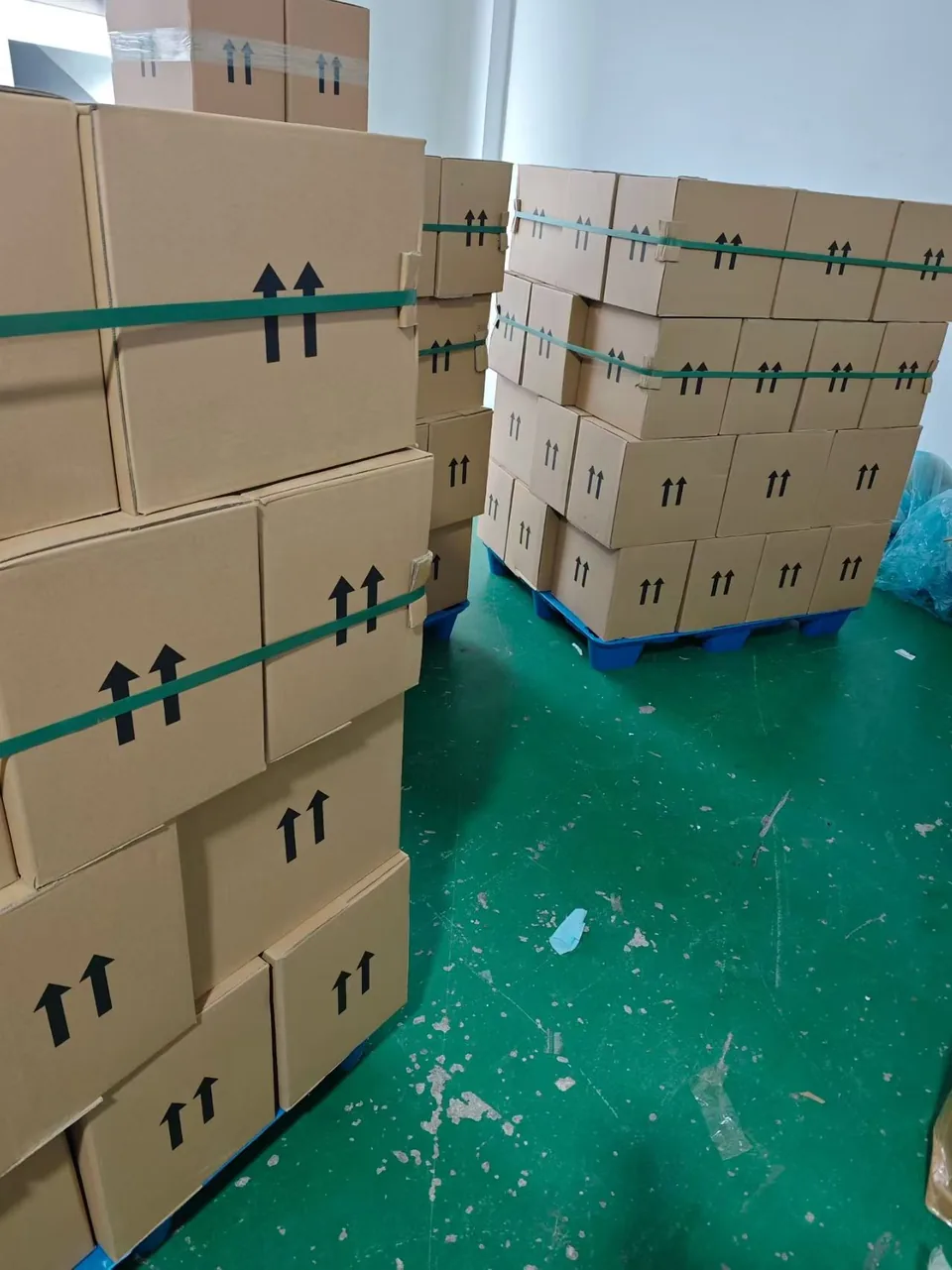
Air cargo is handled harder and faster than ocean, so pack consumer electronics for a ride of stacked pallets, rapid transfers and pressure changes rather than a quiet box. Use double-wall cartons, form-fitting inner dunnage and edge protection, band the cartons to a solid, ISPM 15-marked pallet, and seal with tamper-evident tape so a customs inspection can be resealed cleanly. Keep retail-ready cartons protected, because a damaged outer carton on an express delivery is a failed delivery and a write-off of the speed premium you paid for.
Mark each pallet with the consignee, the EORI-holding importer and a clear contents label, and separate any battery-containing cartons so they can be located quickly if the terminal queries the DG status. Photograph the final pallet build and the battery marks before sealing, because the photo is your evidence if a handling or compliance question arises mid-transit. A wooden pallet or crate needs the ISPM 15 mark; plywood and OSB are generally exempt, but confirm the base type before stuffing so a non-compliant pallet never becomes the reason for a hold.
A 2-week express timeline, step by step
Working backwards from the required Netherlands delivery date, a 2-week air express plan looks like the following. Each step is a planning estimate, not a guaranteed transit, and the buffer is deliberately placed at the customs step, which is the part most exposed to queries and inspections.
- Day -14: lock the order, packed dimensions, weights, CN codes, battery status and the EORI-holding importer or representative.2
- Day -13 to -11: request a same-scope air quote, confirm Incoterm and Amsterdam or EU-gateway routing, and book space.6
- Day -10 to -7: supplier packs to the air spec, completes CE and WEEE paperwork, and prepares the UN38.3 summary if batteries are present.45
- Day -6 to -4: origin cartage, export clearance and consolidation; ENS lodged before departure.
- Day -3 to +1: main-haul flight, airport-to-airport three to seven days, de-consolidation at the Dutch gateway.
- Day +2 to +5: EU import entry under the UCC, VAT where due, release and road delivery into the Netherlands.
- Day +6 to +7: reserve as buffer for inspection, weather or access delays before the delivery deadline.
Build a same-scope quote checklist and pick your Incoterm
A quote built on different scopes cannot be compared, and on a 2-week express plan the comparison is exactly what protects your budget. Send one complete data pack so the forwarder can price the same weight, volume, currency and Incoterm, and choose the mode that fits the window. The Incoterms 2020 rules decide who pays and who carries risk at each handover, so state the chosen term, commonly CPT or CIP for air to the Netherlands, or EXW if you control the origin leg.6
For air express, CIP or CPT to Amsterdam keeps risk and cost allocation clear: under CPT the seller delivers to the carrier and risk passes there, while CIP adds insurance to the agreed point, which matters for high-value electronics. Confirm the Incoterm and whether the quote is airport-to-airport or door-to-door before booking, because mixing these hides the clearance and delivery leg that eats the two weeks. A quote that stops at the airport is not a 2-week plan; it is a 2-week plan missing its most fragile half.
- Packed carton dimensions, total CBM and gross weight in kilograms, with the air volumetric divisor stated.
- CN codes per SKU, invoice values, country of origin and the Access2Markets duty and requirement result.1
- Battery status: installed, spare or loose, with UN38.3 summary and the IATA packing instruction.
- EORI number of the declarant and confirmation it matches the invoice importer.2
- CE declaration and WEEE registration proof for the Netherlands market.45
- Chosen Incoterm, currency and whether the quote is airport-to-airport or door-to-door.6
- Exact delivery address, dock or liftgate access, receiving hours and contact in the Netherlands.
- Confirmation that figures are planning estimates and will be reconfirmed before booking.
What are the most common 2-week express mistakes?
Most 2-week failures are planned in the quote, not caused by the aircraft. Lock the data pack, compliance paperwork and battery status at the purchase-order stage and reconfirm them at the ready date; the issues below each cost little to fix at booking and a lot at the destination, so review them against your plan before you commit space.
- Quoting air against ocean on different scopes: restate all on the same weight, volume, currency and Incoterm.
- Forgetting the EORI: a non-EU declarant still needs one to lodge the ENS and entry.2
- Assuming the 22 EUR VAT exemption still exists: it was removed in 2021, so plan VAT via IOSS or the import entry.3
- Shipping batteries without UN38.3 or the IATA mark: the batch can be refused at origin.
- Missing CE or WEEE proof: Dutch release can stop on a compliance check.45
- Using catalogue dimensions: re-measure packed cartons, because air bills on volume at 167 kg per CBM.
- Treating the supplier DDP as a hand-off: the importer still owns classification and entry.
If factory, forwarder and broker hold different carton lists, CN codes or battery status, the ENS, declaration and invoice disagree and cause holds. Name one owner for the express data pack.