
Shipping Furniture from China to Canada: Container Options, Packaging and Warehouse Delivery
For a full container of furniture, book ocean FCL into the port that shortens your inland leg: Vancouver for western warehouses, Montreal or Toronto for eastern ones, drayed or railed inland on one DAP scope. Pick a 20GP for dense heavy pieces and a 40GP or 40HC for bulky flat-pack; the decisive criterion is packed CBM against usable container cube, not gross weight. Register a BN15 and enrol in CARM before the first shipment.1 Allow roughly five to eight weeks door-to-door from a South China supplier, and confirm the current schedule with the carrier.
- Route by total inland leg, not the ocean rate alone: Vancouver is the shortest ocean transit from South China, while Montreal and Toronto add rail or long-haul drayage that belongs in the same door-to-door comparison.
- Choose the container on packed CBM and stackability: dense case goods suit a 20GP, bulky flat-pack a 40GP or 40HC, and assembled non-stackable pieces waste cube in either box.
- Register before you book: a Business Number with a BN15 import account and CARM portal enrolment are importer-side steps, and DDP terms do not remove classification, compliance or record-keeping duties.125
- Keep duty and GST/HST accounting on a separate line: the accounting declaration and release work sit apart from freight, so exclude them from the per-container freight build-up and verify the current official notice before booking.3
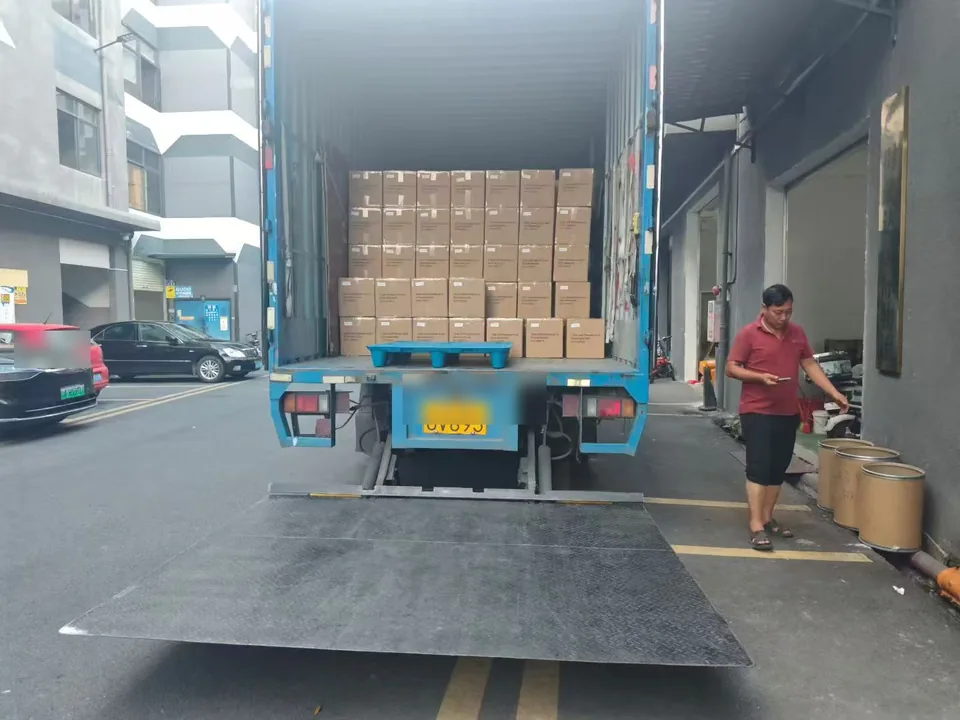
- State the receiving conditions in the quote: dock height, forklift or pallet jack, receiving hours, appointment and tail-lift needs decide whether the commercial warehouse unload is clean or becomes a damage and re-delivery claim.
On this page
Which Canadian gateway should your furniture container use?
Pick the gateway by the inland leg, not the ocean rate. Vancouver is the western discharge port with a short local dray; Montreal serves Quebec directly; Toronto is reached by intermodal rail from Vancouver or a short dray from Montreal. Vancouver is the shortest ocean transit from South China, but for a Greater Toronto warehouse the cross-country inland leg can cost more than the ocean segment it saved.
The buyer is usually a Canadian retailer, distributor or e-commerce seller replenishing from Foshan and Dongguan on a seasonal container. What is at stake is the shelf date: a container discharged at the wrong coast spends an extra week on rail or truck. Table 1 estimates start at a Foshan supplier warehouse, are in USD on DAP terms under 2026 planning assumptions, and are planning estimates, not live rates; confirm the current schedule with the carrier.
| Destination commercial warehouse | Ocean gateway | Inland leg after discharge | Transit planning estimate | Where the option works and where it fails |
|---|---|---|---|---|
| Vancouver / Lower Mainland | Port of Vancouver | Local drayage, ~30-80 km | Port-to-port Yantian to Vancouver ~2-4 weeks; door-to-door ~4-6 weeks | Lowest inland cost; fails for Ontario or Quebec stock. |
| Calgary / Edmonton | Vancouver plus intermodal rail | Rail ~800-1,200 km then a short dray | Door-to-door ~5-7 weeks including the rail cut-off | Works for prairie distribution; winter adds time. |
| Toronto / Greater Toronto Area | Vancouver plus cross-country rail, or Montreal plus dray | Rail ~3,500 km, or ~540 km dray from Montreal | Port-to-port ~2-4 weeks to Vancouver; door-to-door ~6-8 weeks | Largest market; longest inland leg and schedule risk. |
| Montreal / Quebec | Port of Montreal, direct eastern routing | Local dray ~20-60 km | Port-to-port ~4-6 weeks; door-to-door ~5-7 weeks | Serves Quebec; longer ocean transit than Vancouver. |
| Halifax plus Ontario inland | Port of Halifax | Rail or long-haul dray to Ontario ~1,500 km | Port-to-port ~5-7 weeks; door-to-door ~6-8 weeks | Eastern alternative; check current service availability. |
Table 1 times are planning estimates including clearance and final-mile, starting at a Foshan supplier warehouse. Confirm the current schedule with the carrier before booking.
Does a 20GP, 40GP or 40HC fit your furniture cube?
Choose the container on packed CBM and stackability, not unit count. A 20GP suits dense case goods such as solid-wood cabinets that hit weight limits before filling the box; a 40GP or 40HC suits bulky flat-pack where volume is the constraint. As a Planning Example of usable cube, a 20GP takes roughly 28 CBM, a 40GP about 55 CBM and a 40HC about 65 CBM; confirm the loadable cube with the carrier.
Flat-pack converts air into sellable cube: a knockdown wardrobe stacks into a slim carton instead of a room-sized silhouette, which is why the CBM calculator belongs at the purchase-order stage. Assembled sofas and finished veneer items push you towards a high-cube box because they cannot be double-stacked. Check the container sizes and dimensions against the packed carton list, and re-measure after strapping because corner boards add centimetres that multiply across a few hundred cartons.
How do Vancouver and the eastern inland legs change the landed cost?
Compare the two eastern routings on one identical movement, not their ocean rates. For a 40GP of flat-pack furniture from a Foshan supplier warehouse to a commercial warehouse near Toronto, USD, DAP terms, 2026 planning assumptions, duties and GST/HST excluded, Vancouver buys a cheaper ocean leg and pays for cross-country rail; Montreal pays a longer ocean transit for a shorter final dray. Both are Illustrative Calculations, not live rates; request a current quote.
As an Illustrative Calculation on that scope, Vancouver might show roughly 2,450 USD of ocean freight port-to-port plus 1,380 USD of rail and drayage, against roughly 3,100 USD into Montreal plus 420 USD of local dray. The inland leg nearly cancels the ocean saving, so decide on total door-to-door once rail, drayage, chassis and terminal fees are included. Rail works with a fixed cut-off and a two-week buffer; it fails when a tight window makes the extra week unacceptable. Long-haul trucking from Vancouver fails on cost at container volume.
The Vancouver and Montreal figures describe the same 40GP, the same Foshan origin, the same Toronto destination, USD and DAP terms. They are Illustrative Calculations, not live rates; confirm the current schedule and terminal tariff before booking.
What does a door-to-door furniture cost build-up actually include?
A door-to-door build-up must include the lines a basic ocean quote omits: origin cartage, export handling, origin THC and documentation, ocean freight, destination THC and wharfage, the inland leg, customs release and broker work, and the final warehouse unload. Duties and GST/HST are accounted separately and excluded here because they depend on classification and entry value; no rate is assumed.3 Table 2 is an Illustrative Calculation on one scope, not a tariff or live quotation.
The lines most often missed sit at the destination. Terminal handling and documentation fees are assessed under a tariff that changes, so verify the current official notice before booking; CFS de-consolidation does not apply to a sealed FCL, but container free time does, and a missed pickup creates demurrage and chassis detention. Under DAP the seller arranges carriage while the buyer clears and pays; under DDP the seller pays more, yet the importer still owns classification, product compliance and record-keeping.5
| Cost line | In a basic ocean quote? | Planning Example (USD) | Why it is commonly missed |
|---|---|---|---|
| Origin cartage, export handling, origin THC and documentation | Partly | 980 | Per-container origin fees are added after the ocean rate. |
| Ocean freight, port-to-port, Yantian to Vancouver (planning estimate) | Included | 2,450 | The quoted rate; confirm the current schedule. |
| Destination THC, wharfage and terminal fees at Vancouver | Often excluded | 620 | Assessed on arrival; verify the current official notice. |
| Intermodal rail Vancouver to Toronto plus destination drayage | Excluded | 1,380 | The largest difference between western and eastern warehouses. |
| Customs release, broker fee and accounting declaration support | Excluded | 340 | Release and accounting sit apart from freight; duties excluded.3 |
| Warehouse appointment, tail-lift or pallet-jack unload, proof of delivery | Excluded | 260 | Receiving conditions and access surcharges appear at the door. |
| Total, duties, GST/HST and taxes excluded (Illustrative Calculation) | Not applicable | 6,030 | A planning example; storage and demurrage are zero only if pickup is on time. |
Table 2 is an Illustrative Calculation, not a quotation or live rate. Duties, GST/HST and taxes are excluded, port-to-port figures are planning estimates, and storage, demurrage or re-delivery appear only when clearance or pickup slips. Confirm the current schedule before booking.
How should furniture be packed to survive a container and a warehouse unload?
Specify packaging in the purchase order, not at the loading door. Furniture damage is mostly crushing, scuffing and moisture: double-wall cartons, corner and edge boards, foam on finished surfaces, and a sealed poly bag with desiccant for veneer or lacquer. Strap the load so weight travels down the carton walls, and mark this-side-up, no-top-load and a maximum stack height. A pallet-jack or tail-lift unload is the second damage risk, so the outer carton must survive handling after the container.
Any solid-wood pallet, crate or dunnage must carry the ISPM 15 treatment mark; engineered wood such as plywood or OSB is generally exempt, but verify the current official notice and the latest edition before booking because markings are revised.4 Unmarked packaging can be refused or re-exported at your cost, so photograph every stamp. For a warehousing services handover, agree dock height, forklift availability, receiving hours, an appointment window and who signs the proof of delivery.
Receiving conditions at a commercial warehouse
A commercial address with a loading dock absorbs a palletised or floor-loaded container without a residential appointment, liftgate or stair carry, and is the cheapest place to receive an FCL. State dock height, forklift or tail-lift needs, receiving hours and contact so the carrier brings the right equipment. A missed appointment triggers re-delivery and possibly storage.
Moisture and condensation on a long ocean leg
A container crossing from humid South China into a Canadian winter passes through large temperature swings, so condensation can mark lacquer and swell veneer even with no leak. Use a moisture barrier, desiccant and a breathable wrap, and avoid loading cartons against steel walls. Verify the current packing guidance before booking and photograph the stuffed container.
Who is the importer of record, and what do CARM, BN15 and GST/HST accounting change?
The Canadian importer of record answers for classification, valuation, product compliance and record-keeping, and that duty does not disappear on DDP terms. To import commercially you set up a Business Number with a BN15 import/export account,2 enrol in the CARM portal and delegate a licensed broker.1 The broker transmits release and accounting data, but the importer still owns HS codes, declared value and supporting documents; release is subject to CBSA review and is never guaranteed.
Duty and GST/HST are accounted through the customs accounting and release process rather than the freight invoice, so keep them out of the per-container comparison and confirm who pays them under the chosen Incoterm.3 Under DAP the buyer clears and pays; under DDP the seller pays, yet classification, compliance and record-keeping remain with the importer.5 The supplier provides the invoice, packing list and material declarations; the importer or broker the BN15, HS codes and release data. HS revisions and portal rules change, so verify the current CBSA guidance before booking; see Shipping to Canada.
Who does what from supplier readiness to a signed proof of delivery?
The sequence is supplier readiness, booking, origin handling and export clearance, ocean carriage, destination release, the inland leg and a signed proof of delivery. As a planning estimate, port-to-port from a South China load port to Vancouver is roughly two to four weeks, while door-to-door to a Toronto or Montreal commercial warehouse including clearance, the inland leg and final-mile is roughly five to eight weeks. Clearance, rail cut-offs and final-mile add time; confirm the current schedule with the carrier.
Name one data owner for the carton list, HS codes and BN15 status, because a mismatch between the invoice, the release data and the packing list is the most common cause of a hold. Under DAP the physical sequence is the same whoever pays each line. Confirm the cut-off for ocean freight services as soon as the supplier gives a ready date.
- Supplier confirms the ready date and sends packed dimensions, gross weight, carton count and pallet-mark photos.
- You or your forwarder book the 20GP, 40GP or 40HC slot and state the Incoterm and delivery access.
- The importer confirms BN15, CARM enrolment and broker authority before the first shipment.12
- Cartons move to the CY, are export-cleared, and the container is sealed with a photographed load plan.
- The broker prepares release and accounting data on classified HS codes; duties and GST/HST are assessed separately.3
- On arrival the container clears, terminal fees are settled, and it moves by rail or dray to the warehouse.
- The final-mile carrier delivers against a booked appointment and a signed proof of delivery, noting any damage on receipt.
What information must you send your forwarder for an accurate quote?
Send one complete data pack, because a quote built on estimates is revised upward at the destination. The forwarder can only price chargeable CBM, choose the container, plan the inland leg and book the right final-mile equipment when carton detail, material declarations and address access arrive together. Anything missing reappears as a terminal surprise, a misclassification or a failed appointment.
Ask for packed dimensions after cartons are sealed, not catalogue sizes, and state whether the load is palletised or floor-loaded. A wardrobe grows once corner protection is added, and that difference across two hundred cartons changes the CBM, the container choice and Table 2.
- Packed carton dimensions per SKU, carton count, total gross weight and total CBM.
- Which figure is chargeable, and whether cartons are stackable, no-top-load or limited to a stack height.
- Photos of packed cartons, internal protection, the pallet build and any ISPM 15 stamp.4
- Six-digit HS codes per SKU, invoice values and the declared country of origin.
- Supplier ready date, origin pickup address, chosen Incoterm and required delivery date.
- Exact delivery address, dock height, forklift or tail-lift access, receiving hours and contact.
- Wood packaging, material declarations and any batteries in powered or motion furniture.
- Importer BN15 status, CARM enrolment and the broker's name, so release data is ready.1
What are the most common mistakes, and how do you fix them?
Most furniture shipping problems are quoting, packaging and registration errors made before the cargo moves, not carrier failures. Lock the data pack, the packaging spec, the importer registration and the receiving conditions at the purchase-order stage, then re-confirm them at the ready date. Each issue below costs little to fix at booking and a great deal at the destination.
- Comparing gateways on the ocean rate alone: restate both on the same volume, currency, Incoterm and door-to-door scope.
- Using catalogue dimensions instead of packed cartons: re-measure after strapping, then recompute CBM and the container plan.
- Omitting destination fees and the inland leg: add terminal, rail, drayage and unload lines and verify the current tariff.
- Assuming wood pallets are compliant: require the ISPM 15 mark and photograph it before loading.4
- Booking before BN15 and CARM are in place: register the importer and enrol the portal before the first container sails.12
- Treating DDP as a hand-off: the importer still owns classification, compliance and record-keeping.5
If factory, forwarder and broker hold different carton lists or HS sets, the release data disagrees with the invoice and the container waits. Name one owner for the data pack before booking.