
Shipping Furniture from China to the UK: LCL, FCL and Delivery Cost Breakdown
For a part-load furniture order into Great Britain, LCL is usually the lower cash cost below roughly 14-18 CBM, but FCL becomes the safer choice once bulky or fragile pieces make repeated handling a damage risk. The decisive criterion is total landed cost on one identical scope: compare destination terminal charges, de-consolidation, brokerage and a booked delivery slot, not the ocean rate alone. A GB EORI and a named importer of record are required before arrival. Every figure below is a Planning Example; confirm live rates with the carrier.
- Decide LCL vs FCL on the total landed cost of one identical scope (same 14 CBM, same DAP terms, USD), never on the headline ocean rate.
- A GB EORI and a named importer of record must be in place before arrival; even DDP leaves classification, compliance and record-keeping with the importer.
- Insist on a written quote that separates destination THC and documentation fees from freight, because these lines are commonly excluded.
- For bulky furniture, treat the booked delivery slot, tail-lift and any re-delivery as final-mile cost, not an afterthought.
- Postponed VAT accounting can ease import-VAT cash flow; verify the current rules and your eligibility before relying on it.3
On this page
Should you book LCL or FCL for one furniture order into the UK?
Base the decision on total landed cost of the same goods to the same address, not the first ocean rate quoted. For a part-load of flat-pack and assembled furniture, LCL wins on cash outlay while the consignment is small, because you pay only for the cubic metres used. FCL wins as volume rises, when fragile finishes make repeated handling a damage risk, or when a fixed showroom date needs a single controlled unload. Check the volume with a CBM calculator before requesting quotes.
Hold one scope constant. The worked example prices a single 14.0 CBM, 2,150 kg furniture order from a Foshan supplier warehouse to a commercial warehouse near Birmingham, in USD on DAP terms, 2026 planning assumptions, you as importer of record under a GB EORI. Both modes move that identical shipment, so any difference is the mode itself, not volume, currency or trade term. All figures are Planning Examples; confirm live rates for your ready date.
What does a GB EORI number actually let you do?
A GB EORI identifies your business to UK customs; without one you cannot lodge an import declaration or clear goods into Great Britain.1 Obtain it before the shipment sails, then use it on the import entry, any duty deferment account and for postponed VAT accounting. If you deliver into Northern Ireland, check whether an XI EORI is also required. A missing or mismatched EORI is a common reason a first container sits at the terminal.
With the number in place, the official step-by-step import process runs from classification and valuation through the declaration to accounting for duty and tax, then release.2 Your forwarder or broker files the entry using the commercial invoice, packing list, bill of lading and commodity codes you supply, but you remain importer of record and answerable for accuracy. Agree who supplies each document at booking; chasing a missing packing list after arrival costs far more.
- Supplier confirms carton dimensions, gross weight, CBM, stackability and the goods-ready date.
- You or your broker confirm commodity codes and the import entry data with the commercial invoice.
- Forwarder collects the goods, consolidates LCL or loads the FCL, and files the export declaration.
- Carrier issues the bill of lading and the vessel sails port-to-port toward the named UK port.
- Before arrival, the broker lodges the import declaration under your GB EORI.
- Terminal handling, de-consolidation and clearance complete; duty and import VAT are accounted for.
- A booked delivery slot is agreed and the goods move inland to your warehouse for unloading.
Which Incoterm puts clearance and destination charges on your side?
The Incoterm decides who pays for and controls each leg - see Understanding Incoterms - and is the main reason two quotes for the same furniture differ. Under EXW or FOB you arrange most of the chain; under DAP the seller carries goods to your named UK place but you clear import and pay duty and tax; under DDP the seller also clears and pays taxes.5 Write the chosen term into every quote before comparing.
Do not treat DDP as freedom from responsibility. Even where a seller clears customs under DDP, you as importer still bear classification, product compliance and record-keeping duties, and should hold the invoice, packing list and proof of the import entry.5 For furniture, confirm who declares any wood packaging or treated timber. Ask the forwarder to state in writing which party is importer of record before you sign.
DDP shifts payment and clearance tasks to the seller, but the importer still owns commodity-code accuracy, product compliance and record-keeping. Never assume a DDP quote removes your obligations or guarantees clearance; allow a buffer for examination and confirm the current official notice before booking.
What does a furniture freight quote include - and what is commonly excluded?
Read a quote as a list of included lines, not as a single door-to-door number. A bare ocean rate covers the port-to-port leg and little else, while a fuller Door-to-Door Quote Scope bundles collection, export docs, ocean freight and inland delivery. The gap is where destination terminal charges, de-consolidation, brokerage and the delivery slot hide - exactly the lines you must separate before comparing LCL with FCL.
Ask for a written quotation that marks each line included, excluded or 'estimated, to be confirmed', and states the Incoterm, currency and validity date. Planning Example: a quote saying 'ocean freight USD 910' for 14 CBM covers the sea leg only; destination THC, de-consolidation and final-mile are separate. Confirm live rates and the current terminal fee schedule before treating any number as fixed, and check the latest edition of the carrier's tariff for accessorials.
| Cost item | In a basic door-to-door quote | Commonly excluded / billed separately | Planning note |
|---|---|---|---|
| Ocean freight (port-to-port) | Usually included as the carrier rate | Peak-season or bunker surcharges if not fixed | State the validity date and the named UK port |
| Origin haulage + export documentation | Sometimes bundled | Often a separate origin line | Confirm whether Foshan collection is covered |
| Origin THC + documentation fee | Rarely itemised | Commonly added at origin | Keep it visible for like-for-like comparison |
| Destination THC / port charges | Rarely in a bare ocean quote | Almost always charged by the terminal | Priced per consignment, not per CBM |
| De-consolidation (LCL) / CFS fees | Almost never included | Standard separate charge for LCL | FCL instead bears consignee unload labour |
| Customs entry / broker | Only if 'with clearance' is written | Usually excluded from freight-only quotes | Importer of record files under a GB EORI |
| Booked slot / tail-lift / waiting time | Rarely included | Billed as accessorials after arrival | Agree the delivery window in advance |
How do LCL and FCL compare on one identical shipment scope?
Fix the scope, then let the numbers decide. The table prices one identical order - 14.0 CBM and 2,150 kg of furniture, Foshan supplier to a commercial warehouse near Birmingham, USD, DAP terms, 2026 planning assumptions, you as importer of record with a GB EORI. LCL bills the 14.0 CBM used; FCL books a 20ft container at a flat rate though half empty. The LCL vs FCL Total Cost Guide applies the same logic here.
Two cautions keep the comparison honest. Duties and import VAT are left out of both columns because they depend on the commodity code, not the mode; verify the current rate and your postponed-VAT eligibility separately. Every figure is an Illustrative Calculation and a live rate must be quoted. Note also that the cheaper LCL total assumes no damage and one successful delivery - precisely the assumption bulky furniture can break.
| Cost line (Illustrative, USD) | LCL (14.0 CBM) | FCL (20ft, part-loaded) | What drives the difference |
|---|---|---|---|
| Origin haulage, export docs + origin THC | $615 | $680 | FCL collection needs a container vehicle |
| Ocean freight (port-to-port) | $910 | $1,650 | LCL per CBM vs a flat 20ft container rate |
| Destination THC / port charges | $260 | $295 | Terminal fees differ by mode and terminal |
| Unloading / de-consolidation | $340 (CFS unpack) | $180 (consignee unload) | LCL pays a CFS fee; FCL unloads once |
| Customs broker + import entry | $165 | $165 | Same entry work under one GB EORI |
| Inland delivery + booked slot + tail-lift | $520 | $640 | Container haulage and empty return add cost |
| Total landed logistics cost | $2,810 | $3,610 | LCL is cheaper on this identical scope |
What are the destination port charges and de-consolidation steps at a UK port?
Destination charges are where a low LCL ocean rate stops looking cheap. Once the vessel berths, the terminal raises a handling charge and related documentation or security fees, and for LCL the consolidation is broken down at a container freight station before collection.4 These are per-consignment charges, so a 14 CBM shipment pays them in full while a full container spreads them across more volume. Ask your forwarder to name the terminal and list each line; verify the current official notice before booking.
On a Shenzhen or Yantian to Felixstowe routing, plan roughly 28-38 days port-to-port and 38-52 days door-to-door from the Foshan supplier, plus clearance, de-consolidation and the booked slot; these are planning estimates, so confirm the current schedule with the carrier. For a part-load, de-consolidation adds working days and a fee, and free-storage time starts once the container is unpacked. Build that buffer into your Ocean Freight plan, not the vessel ETA.
- Destination terminal handling charge and any terminal security or documentation fee.
- LCL de-consolidation or CFS unpack charged per cubic metre or per consignment.
- Customs brokerage, the import entry and any examination or inspection fee.
- Port storage or demurrage if clearance or collection slips past the free time.
- Inland haulage from the port or CFS to the final delivery address.
How do booked delivery slots and final-mile access change the cost?
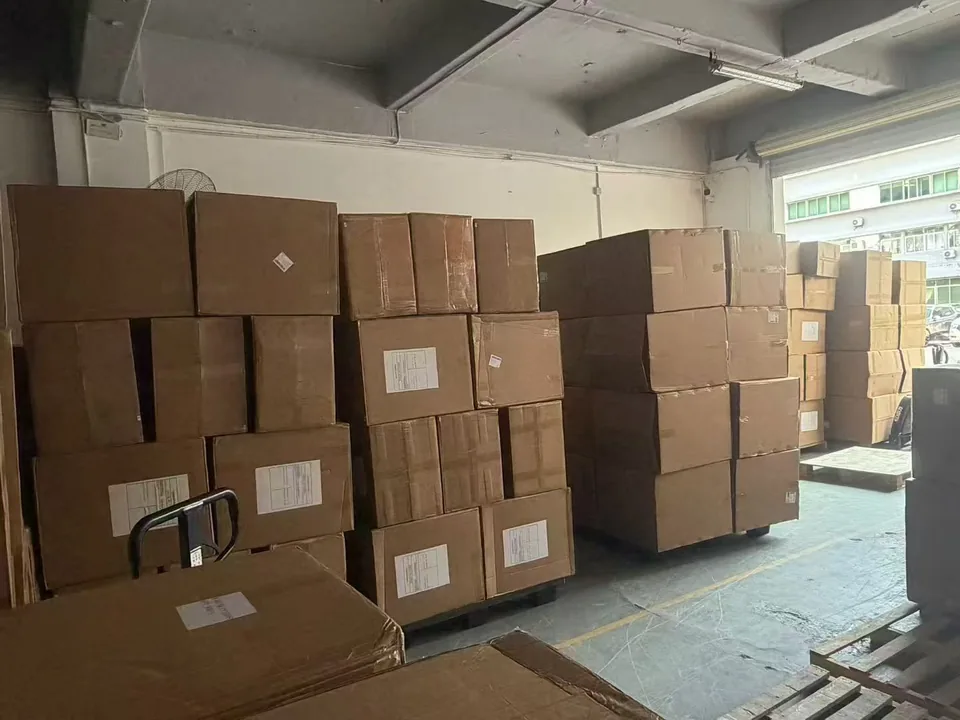
For furniture, the last mile is often the most expensive per hour. UK commercial warehouses commonly require a pre-booked delivery window, and a missed slot can trigger waiting, re-delivery or return-to-depot charges absent from the ocean quote. State the address, access limits and whether a tail-lift or two-person crew is needed at quote stage, then confirm the slot in writing a week before arrival. A wardrobe carton one driver cannot carry is a planning detail, not a surprise.
Compare a commercial warehouse with a high-street delivery before fixing the mode. A warehouse with a loading bay accepts palletised FCL or LCL tail-lift delivery cheaply; a shop with narrow access, timed vehicle zones or no lift may need a smaller vehicle and two-person team, multiplying cost. For assembled or finished furniture, allow time for inspection on receipt, since signing clean without noting damage weakens a later insurance claim.
Commercial warehouse with a loading bay
A ground-level bay or dock lets the carrier unload palletised cartons in one visit, which keeps the booked-slot cost predictable and suits FCL. Confirm forklift or pallet-truck availability, receiving hours and whether the warehouse will sign for the consignment on your behalf. This is the lowest-risk final-mile profile for bulky furniture.
Residential or high-street address with restricted access
Time-limited vehicle access, no lift and stair carries can force a smaller van, a two-person crew and a narrow delivery window, each billed as an accessorial. Get the access details in writing, share photos of the entrance if needed, and budget a re-delivery allowance. Where the address cannot take a pallet, plan a loose-loaded LCL delivery instead.
How should you pack and measure furniture for the chosen mode?
Furniture is charged on the space it occupies, so packing moves the freight bill more than weight does. Flat-pack cartons stack and cube out efficiently; assembled chairs, table tops and framed mirrors create dead space and damage easily at each handling point. For LCL, assume cartons are handled beside other shippers' freight several times, so use stronger outer cartons, corner protection and clear stackability markers. For FCL you control the load once and can trade packaging for utilisation.
Measure every carton in centimetres and record length, width, height, gross weight, CBM and stackability, then total the CBM to test the LCL versus FCL break-even. Declare wooden pallets, crates or solid-timber components honestly and check the current treatment and marking rules before booking, since non-compliant wood packaging can be held. Photograph loaded cartons and align the packing list with the physical marks so the warehouse can reconcile the consignment on arrival.
- Record per-carton length, width and height in centimetres, plus gross weight in kilograms.
- Calculate and total the CBM, then compare it with a 20ft and 40ft container's usable volume.
- Mark stackable and non-stackable cartons clearly and keep heavy items at the bottom of each stack.
- Protect finished surfaces, glass and corners, and avoid mixing fragile items with dense cartons.
- Declare wood packaging, engineered board and any treated timber on the packing list.
- Photograph cartons before collection and reconcile the count against the packing list at delivery.
What should you send your forwarder, and which mistakes cost the most?
A usable quote depends on the data you send. Provide the commercial invoice, a packing list with per-carton dimensions and weights, total CBM, stackability, commodity codes or an accurate goods description, the supplier's ready date, the exact delivery address and access notes, the chosen Incoterm and any wood or material declarations. With that pack two forwarders return comparable quotes; without it they assume different scopes and the cheapest number is meaningless.
The costliest mistakes are procedural. Buyers compare a port-to-port ocean rate with a door-to-door number, forget DDP still leaves classification and compliance with them, treat the vessel ETA as the delivery date, and assume clearance is guaranteed. Insist on one written scope, one Incoterm, one currency and a timeline adding clearance, de-consolidation and the booked slot. Confirm live rates and the current terminal schedule before committing, and keep a buffer for examination.
- Commercial invoice with accurate value, currency and full supplier and consignee details.
- Packing list with per-carton dimensions, gross weight, CBM and stackability flags.
- Commodity codes or a precise goods description plus any wood or material declarations.
- Supplier goods-ready date and the required delivery window at the UK address.
- Exact delivery address, loading-bay or lift details, and any need for a tail-lift or two-person crew.
- Chosen Incoterm, preferred mode and whether you hold a GB EORI and use postponed VAT accounting.
Never set a port-to-port LCL rate against a door-to-door FCL rate, and never treat the vessel ETA as your delivery date. Clearance, de-consolidation and the booked slot add days and cost; no timeline is guaranteed, so confirm the current schedule with the carrier and keep a contingency in your plan.