
Shipping Industrial Parts from China to Poland: Rail vs Sea Freight for Repeat Orders
For repeat industrial-parts orders from China to Poland, rail suits steady mid-volume replenishment when routings are available, while sea freight suits heavy, bulky or low-value parts and orders that tolerate longer lead times. The decisive criterion is your weight-to-volume ratio and how much delivery variability your production line can absorb. Plan rail and sea on the same Incoterm and confirm current routings and departures with the operator before committing a schedule — do not assume a fixed service. Under DAP the seller delivers to your Polish address but you remain the importer of record. Build safety stock to bridge transit variability.
- Choose rail or sea by weight-to-volume ratio and cycle tolerance, not by habit — both must be quoted on the same Incoterm and scope.
- Never assume a fixed China–Poland rail schedule; confirm current routings and departures with the operator before you plan production.
- Sea freight usually shows lower planning freight but a longer, more predictable ocean window plus an inland leg into Poland.
- DAP does not remove your importer-of-record duties: classification, product compliance and record-keeping stay with you.
- Size safety stock to the slower mode's variability so a delay never stops your line.
On this page
Repeat orders reward a plan built for continuity, not a one-off quote
A Polish manufacturer, maintenance distributor or MRO reseller importing industrial parts — bearings, seals, fittings, small castings, hydraulic components, fasteners — usually does not buy once. The order is a fixed cadence: a truckload every few weeks, sized to consumption, where a missed delivery can stop a production line or a service contract. The logistics question is therefore not 'what is the cheapest single shipment' but 'what mode and rhythm keep the line fed with the least tied-up capital'.
That shifts the analysis. A one-off quote optimises a single number; a repeat plan optimises the pipeline — the stock on the water, the stock in the warehouse, and the reorder point that triggers the next booking. Rail and sea behave very differently here, and the right answer for a 4,800 kg, 12 CBM monthly batch is not the same as for a 20-tonne annual bulk buy. Start by mapping your true consumption rate before comparing modes.
Rail versus sea: pick by weight-to-volume ratio and cycle tolerance
Rail wins for steady, mid-volume replenishment where the cargo is dense (favourable weight-to-volume ratio) and the buyer can plan around a variable but usually shorter transit than ocean. It suits a distributor who places a repeat booking every 30 days and holds modest safety stock. Rail fails when you need a guaranteed departure on a fixed calendar — services and routings change, and border or transhipment delays are outside your control.
Sea freight wins for heavy, bulky or low-value parts, or for buyers who can absorb a longer and more predictable ocean window plus an inland leg into Poland. It fails for urgent top-ups where a 35-day port-to-port transit plus clearing and trucking would breach your reorder point. The decisive criterion is not price alone but whether your weight-to-volume ratio and cycle tolerance let one mode protect the line without excess inventory.
Whichever you lean toward, quote both on the same Incoterm, the same origin point and the same Polish delivery address so the comparison is honest. Mixing DAP, FOB and EXW across suppliers makes the numbers impossible to rank. For the contract mechanics see the Incoterms guide.
Planning Example — rail versus sea on the same scope
The table below is a Planning Example only. It assumes one consolidated batch of 12 CBM / 4,800 kg of industrial parts moving from a supplier warehouse in Shenzhen to a commercial warehouse near Łódź, Poland, quoted in USD on DAP Incoterm, using 2026 planning assumptions. It is not a live rate; confirm current pricing and routings with your forwarder and the rail operator before booking.
| Mode | Transit (planning, terminal-to-terminal) | Planning freight & handling (USD) | Inland & destination (USD) | All-in planning (USD) | Notes |
|---|---|---|---|---|---|
| Rail (consolidated block train, transhipment en route) | 18–26 days terminal-to-terminal; confirm current routings/departures with operator | 3,100–3,900 | 1,200–1,700 (de-consol, EORI clearance, truck to Łódź) | 4,300–5,600 | Transit varies with border/transhipment; no fixed schedule asserted |
| Rail direct-block (if a current service matches your lane) | 15–22 days terminal-to-terminal; confirm with operator | 3,400–4,200 | 1,100–1,600 | 4,500–5,800 | Fastest when available; availability must be confirmed |
| Sea FCL (20ft to a Baltic/Polish gateway) | 30–40 days port-to-port; +5–9 days clearing & inland | 1,900–2,500 | 1,400–2,000 (THC, wharfage, inland to Łódź) | 3,300–4,500 | Lower planning freight, longer and more predictable ocean window |
| Sea LCL (shared container, sub-FCL volume) | 34–44 days port-to-port + de-consol | 2,400–3,200 | 1,500–2,100 | 3,900–5,300 | Good for sub-FCL volume; de-consol adds time and cost |
Rail availability, transhipment and what to confirm with the operator
China–Europe rail capacity and routings change with network, border and transhipment conditions. For planning, treat any published transit as a range, not a promise. Before you build a production schedule around rail, confirm with the operator the currently operating routings, the departure frequency from your origin terminal, and where transhipment or gauge change occurs. Do not assert a specific operating route or fixed weekly schedule in your own planning documents — state that current routings and departures must be confirmed.
Transhipment is the main variability source. A block train may be re-marshalled or held at a border, and each hand-off adds days you cannot fully predict. Build that uncertainty into lead time and avoid promising your customer a delivery date that depends on a rail departure you have not confirmed. If a particular lane is full or suspended, fall back to sea for that cycle rather than slipping the whole replenishment plan.
Never plan production around an unconfirmed rail departure. Ask the operator for the current routing, the next available departure, and the typical transhipment points, then add a buffer to every date you pass downstream.
The sea route and the inland leg into Poland
Sea freight to Poland almost always includes an inland leg. A 20ft FCL may discharge at a Baltic or Polish gateway or at a larger North European hub and then move by rail or road to your Łódź, Warsaw or Wrocław warehouse. The ocean transit (port-to-port) is only part of the clock; terminal handling, customs and the final truck add 5–9 planning days on top of the sailing window.
The planning advantage of sea is predictability of the ocean window rather than speed. A 30–40 day port-to-port sailing is slow but steady, which makes safety-stock maths easier than for rail's shorter but bumpier transit. For dense, heavy parts the lower planning freight usually outweighs the extra days, provided your reorder point already covers the longer pipeline.
Choose the gateway by total landed cost, not by the shortest sailing. A slightly longer ocean leg to a Polish or Baltic gateway may beat a 'closer' hub that forces an expensive inland repositioning, and the opposite is equally possible. Model the full door-to-port-plus-inland cost for two gateways before fixing the route, and keep a backup gateway in the plan so a terminal congestion does not stall the replenishment.
Incoterms decide who pays each leg on a repeat contract
On a repeat contract the Incoterm sets who arranges and pays origin handling, freight, destination terminal, customs and final delivery — and where risk transfers. Under DAP the seller pays through to your Polish address but you, as importer, still handle import declaration and duty. Under FCA the seller delivers to the carrier at origin and you control the freight; under EXW you collect from the factory. Pick one term and hold every supplier to it so monthly quotes are comparable. The Incoterms guide explains the cost and risk split in detail.
Whatever you choose, the Incoterm does not change your underlying obligation as importer of record. Even on DDP, where the seller prepays duty, you remain responsible for correct classification, product compliance and record-keeping; DDP removes neither the importer's responsibility nor the possibility that customs queries the shipment. State the term plus the named place on every invoice and booking.
Planning safety stock and reorder cycles for repeat orders
Safety stock is what turns transit variability into a non-event. The Illustrative Calculation below sizes the buffer and reorder point for our 12 CBM / 4,800 kg batch, assuming steady Polish consumption. Replace the day counts with your own demand and confirmed transit ranges; the method stays the same. The goal is that the next booking arrives before the on-hand stock hits zero, even if the slower mode slips.
| Parameter | Rail plan (days) | Sea plan (days) | How to use it |
|---|---|---|---|
| Transit variability buffer | +10 | +5 | Add to lead time when planning the schedule |
| Reorder point (days of cover) | 38–46 | 40–50 | Place the next order when stock falls to this |
| Safety stock (minimum days) | 14 | 10 | Floor buffer that should never be consumed |
| Order cycle | Every 30 days | Every 45 days | Fixed cadence agreed with the supplier |
| Total pipeline stock (days) | 52–60 | 50–60 | Stock in transit plus warehouse on hand |
Customs, EORI and importer responsibility in the EU
Non-EU operators need an EORI number to clear goods into the EU, and your Polish entity (or a nominated representative) acts as importer of record. Under the Union Customs Code the import declaration, tariff classification and payment of applicable duty and import VAT sit with that importer; the forwarder or broker files on your behalf but the responsibility does not move.21
Use Access2Markets to check the tariff treatment and any origin or documentation formalities for your specific HS codes before you ship; this is planning input, not a rate quote, and rules change, so verify the current notice. Correct classification is your duty regardless of Incoterm, and an error can delay clearance or trigger a post-clearance query. Budget for duty and VAT as a separate line, never folded silently into a 'landed' price you cannot audit.3
What to send your forwarder for a repeat-order quote
- Carton dimensions (L×W×H cm) and carton count, so CBM and stacking can be calculated precisely.
- Gross weight per carton and total, to confirm the weight-to-volume ratio that drives mode choice.
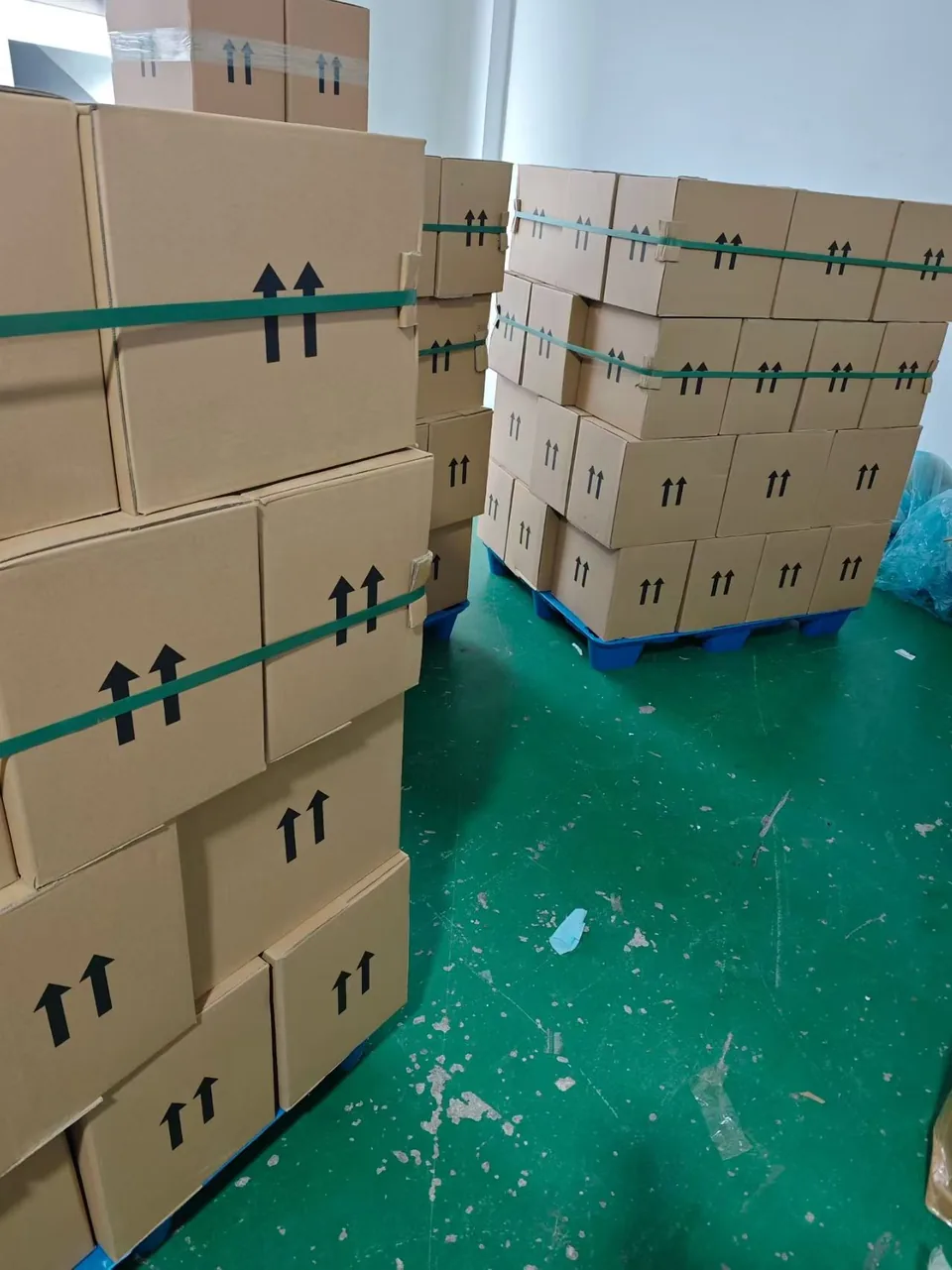
- Total CBM and whether cartons are stackable, fragile or require banding on a pallet.
- HS codes for every part type, with photos of markings and any material declarations.
- Ready date at origin and your Polish delivery address, including dock access and appointment needs.
- Chosen Incoterm and named place, stated identically for every supplier in the plan.
- Any wood packaging (must carry the ISPM 15 mark) or chemical/material declarations to pre-clear.
Common mistakes on repeat industrial-parts shipments
- Assuming a fixed rail schedule: always confirm current routings and departures with the operator before planning production.
- Quoting rail and sea on different Incoterms, which hides the real cost difference between the modes.
- Holding no safety stock, so the first rail delay becomes a line stoppage instead of a minor slip.
- Letting the supplier choose HS codes, which shifts classification risk onto a party that does not clear the goods.
- Forgetting EORI or broker instruction, which turns a routine arrival into a storage-accruing hold at the terminal.