
Shipping LED & Lighting from China to Australia: Planning a Bulk Replenishment
For a bulk LED and lighting replenishment from China to Australia, ocean FCL is usually right above roughly 15 to 18 CBM, because you pay for a whole container and per-unit freight falls sharply versus LCL. Register an ABN and file an Import Declaration (N10) for goods above AUD1,000; below that threshold sea or air cargo can use Self-Assessed Clearance. Budget 10% GST on the taxable import value and consider the deferred GST scheme. Confirm any electrical-equipment compliance and wood-packaging biosecurity via BICON, plan a 30 to 50 day door-to-door window, request a same-scope quote and confirm current rates.
- Ocean FCL wins for a bulk LED and lighting restock above roughly 15 to 18 CBM because the goods are dense enough to fill a box and the per-unit freight beats LCL; keep LCL for interim top-ups below that line and air only for stock-out emergencies.
- A restock is a commercial import, so you need an ABN and a correct tariff classification with transaction-value valuation; the importer of record owns that accuracy even on DDP terms, so name that party before booking the container.
- Goods above AUD1,000 require an Import Declaration (N10) lodged and assessed pre-release through the Integrated Cargo System, while cargo at or below that value can move by Self-Assessed Clearance, but the line is about customs value, not freight cost.
- GST of 10% is charged on the taxable import value, customs value plus duty plus transport and insurance to the port, and a registered business can use the deferred GST scheme to claim it back on the same activity statement rather than paying at the border.
- Any solid-wood packaging or plant and animal-derived components in the lighting consignment can need a biosecurity import permit checked through BICON, so confirm conditions before the container is stuffed and keep ISPM 15 marks photographed.
On this page
Should a bulk LED and lighting restock move by FCL, LCL or air?
A bulk replenishment is a repeat purchase that keeps an Australian store, distribution centre or installer supplied, so the planning priority is cost per unit and a predictable cadence rather than the lowest possible transit time. LED and lighting products, panels, tubes, bulbs, drivers, fittings and aluminium profiles are dense and stackable, which means a replenishment order tends to fill space quickly on weight and cube compared with bulky packaging or furniture. Once the consignment reaches roughly 15 to 18 CBM, the freight economics usually tilt toward a full container, because you pay one container rate instead of paying for shared space at the LCL rate per cubic metre plus the per-shipment consolidation fees.
LCL still has a role in a replenishment programme. When you are bridging a stock gap before the next full container or sending a smaller top-up, LCL lets you ship the exact volume without waiting to accumulate a full box. Air freight should be reserved for genuine stock-out emergencies, such as a best-selling SKU about to go cold, because air bills on a far heavier volumetric divisor, about 1 CBM treated as 167 kg, and an LED replenishment is heavy enough that air quickly becomes the most expensive option per unit. Build the cadence so the routine restock is FCL, the bridge is LCL and air is the exception you can justify on lost-sales cost.
The practical way to set the cadence is to forecast sell-through from the last few cycles, then size each container to land about two to three weeks before the stock hits the reorder point. A replenishment that lands too early ties up warehouse space and working capital; one that lands too late triggers an expensive LCL or air bridge. Most Australian importers of lighting run a monthly or bi-monthly FCL rhythm, with a small standing LCL allowance for unexpected demand, and they treat the air option as a rarely used safety valve rather than a planning assumption.
| Factor | Ocean FCL 20GP (18 CBM) | Ocean LCL (18 CBM) | Air (18 CBM) |
|---|---|---|---|
| Chargeable basis | Per full container | Weight-or-measure, 1 CBM ≈ 1,000 kg | Volumetric, 1 CBM ≈ 167 kg |
| Illustrative port-to-port cost (AUD) | $1,800 – $2,600 | $2,600 – $3,800 | $11,000 – $16,000 |
| Planning transit, port-to-port | 16 – 26 days | 18 – 28 days | 3 – 6 days |
| Planning transit, door-to-door | 30 – 50 days | 34 – 54 days | 6 – 12 days |
| Best fit for a restock | Routine bulk cadence | Bridge or top-up | Stock-out emergency |
Table 1 is a Planning Example comparing three modes on one identical 18 CBM scope, AUD and CIF Sydney terms. Port-to-port and door-to-door figures are planning estimates, not quotations; confirm the current schedule and rates before booking.
How is chargeable weight and CBM built up for lighting goods?
Ocean freight for a replenishment is rated on a weight-or-measure basis: the carrier charges the greater of the actual gross weight and the volume converted at a standard factor, usually 1 CBM treated as 1,000 kg. LED goods are dense, so a well-packed 20GP of panels and fittings often gets close to the container's payload before it fills on cube, which is exactly why FCL becomes efficient in this band. Build the chargeable figure from the packed cartons after dunnage and palletising, not from catalogue dimensions, because the difference across hundreds of cartons changes both the CBM and the LCL rate tier.
Use the CBM calculator to convert packed dimensions into cube before you request a quote, and ask the forwarder which figure, volume or weight, drives the charge on your specific lane. A replenishment repeats every cycle, so measure the packed carton once, lock it as the standard, and every future quote compares on the same footprint. That consistency is what lets you spot a rate change rather than a scope change when the next invoice arrives.
Weigh a finished, sealed carton on a scale and keep that ticket with the shipment file, because the actual gross weight is the other half of the weight-or-measure comparison and it is the number the terminal and the container-weight declaration rely on. An overweight container can be rolled at the origin or reworked at cost on arrival, so the booked weight should be a verified figure, not a catalogue estimate. When the lighting mix changes between cycles, re-measure and re-weigh only the changed lines and keep the standard lines untouched.
| Item | Cartons | CBM | Gross kg | Ocean chargeable kg | Air chargeable kg |
|---|---|---|---|---|---|
| LED panels and tubes | 200 | 7.20 | 3,400 | 7,200 | 1,202 |
| Drivers and fittings | 160 | 4.50 | 2,100 | 4,500 | 752 |
| Aluminium profiles | 80 | 3.60 | 1,900 | 3,600 | 601 |
| Cartons and dunnage | 60 | 2.70 | 540 | 2,700 | 451 |
| Total | 500 | 18.00 | 7,940 | 18,000 | 3,006 |
Table 2 is an Illustrative Calculation with stated assumptions, not a tariff, quotation or live rate. It shows how a dense LED mix is charged on cube for ocean and on the heavier air divisor. Confirm current factors and rates before booking.
What Australian import requirements apply to a restock?
A replenishment is a commercial import, so the Australian requirements to import apply in full: you need an Australian Business Number, a correct tariff classification for each line, a transaction-value based valuation, an importer of record, and any applicable duty concessions, labelling and intellectual-property considerations. The ABF publishes these as the requirements to import, and Home Affairs is the agency that collects duty and GST at the border, so the data you lodge drives both the release and the tax.2
Classify each lighting line under its own tariff heading rather than by the whole order, because the rate and any concession depend on the exact description, for example luminaires, LED modules, ballasts or drivers may sit under different subheadings. The importer of record owns the correctness of that classification and the resulting duty, even when the supplier or a DDP seller arranges the shipment, so keep the evidence of how you classified each SKU and pass it to your broker with the invoice values.2 A restock repeats, which makes a clean, consistent classification file more valuable than on a one-off order.
Do LED and lighting goods need electrical-equipment compliance checks?
Electrical and electronic goods supplied in Australia generally need to meet the relevant electrical safety and, where applicable, energy-efficiency requirements before they can be sold, and that compliance is a supplier and importer responsibility separate from customs clearance. Confirm the applicable marks and certificates for each luminaire and driver before the container sails, because a product that clears customs but fails a state or territory compliance check still cannot be sold. Treat compliance as part of the purchase order, not a query at the dock.
When is an Import Declaration (N10) required versus Self-Assessed Clearance?
The declaration threshold turns on customs value, not freight cost. Goods above AUD1,000 require an Import Declaration, the N10, lodged and assessed through the Integrated Cargo System so the consignment is cleared and any duty and GST assessed before release. Goods at or below AUD1,000 can move by Self-Assessed Clearance for both sea and air cargo, where the low-value pathway applies instead of a full N10.1
For a bulk restock the value almost always exceeds AUD1,000, so plan for the N10 as standard and treat SAC as the rule for the occasional small sample or urgent spare part rather than the main replenishment. Lodge the N10 with accurate tariff lines, values and origin so release is not delayed by a query, and remember that the electronic lodgement through the ICS is the normal channel; a restock that repeats every cycle benefits from a broker template that reuses the same classification and valuation logic each time.1
The N10 also drives the duty and GST assessment, so the values you declare should match the commercial invoice and the manifest exactly, with no rounding that a later system discrepancy flags. Where the supplier invoices in a foreign currency, convert at the rate applicable on the date of the taxable importation and keep that evidence, because the valuation is transaction based and the border agencies expect consistency. A restock that changes price tier or origin between cycles should refresh the template before the container sails rather than after a query lands.1
How is GST on imported goods calculated and deferred?
GST on imported goods is 10% of the taxable import value, which is the customs value plus any duty plus the transport and insurance cost to the port or place of importation, and Home Affairs collects it pre-release alongside any duty. A dense LED replenishment can carry modest or nil duty depending on the tariff line, but the 10% GST usually applies to the taxable import value, so budget it on the landed figure rather than the invoice alone.4
Registered businesses can use the deferred GST scheme, which lets you account for the import GST on your activity statement and claim it back in the same period rather than paying it at the border, improving cash flow across a replenishment cycle. The scheme requires registration and the correct reporting, but for a restock that repeats monthly or quarterly the timing benefit is significant. Confirm your eligibility and reporting method with your tax adviser, and keep the import documents that support the deferred amount.4
What biosecurity and BICON checks apply to lighting cargo?
Lighting goods themselves are generally manufactured articles and not a direct biosecurity risk, but the wood packaging around them, pallets, crates, dunnage and bracing, can be. DAFF runs BICON to publish the biosecurity import conditions, and you should check whether your goods or their wood packaging need a biosecurity import permit before the container is stuffed. Solid wood packaging must meet the ISPM 15 treatment standard, while plywood and processed boards are generally exempt, so confirm the exact condition for your packing rather than assuming.3
Some lighting lines also include plant or animal-derived components, leather, cork, untreated fibres or natural shades, which can trigger a different condition or permit even when the luminaire is otherwise electrical. Check BICON for each affected SKU, because a non-standard assessment can take roughly 40 working days versus about 20 for a standard one, and a missed permit can hold the container on arrival. Photograph every wood mark and keep the BICON condition reference with the shipment file so the clearance team can act fast.3
How should repeated bulk shipments be packaged?
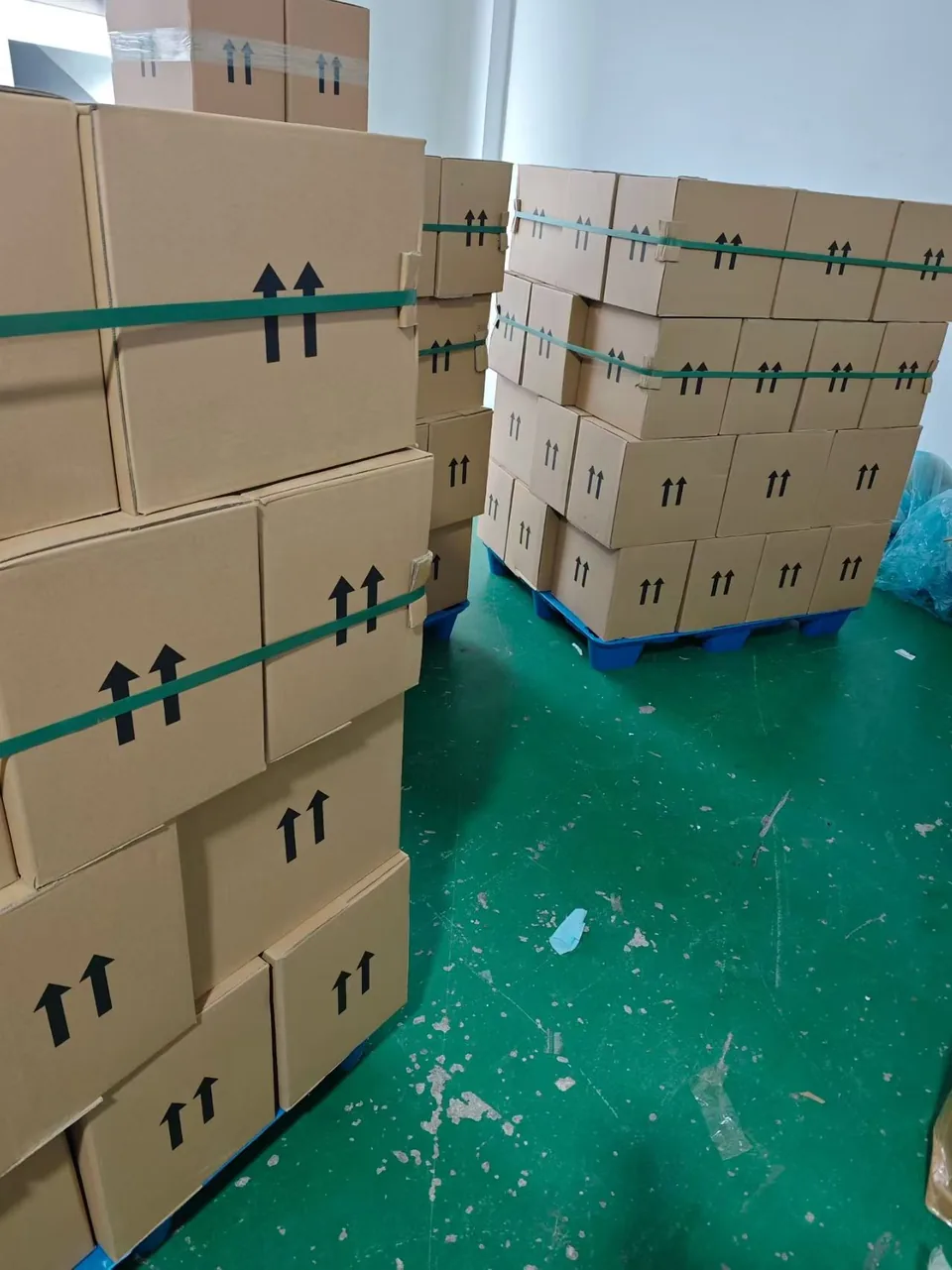
A replenishment repeats, so the packaging spec should be a locked standard rather than a per-shipment decision. Use double-wall cartons for the outer pack, keep box-to-box contact tight with inner dunnage, add edge boards on pallet loads, and mark no-top-load and this-side-up where cartons carry fragile tubes or fittings. Palletise so the load de-consolidates cleanly at the destination warehouse, and require the ISPM 15 mark on any solid-wood base, then photograph it before sealing.3
Because the same cartons travel every cycle, small improvements compound: consistent dimensions let you stack the container to a predictable cube, and a standard pallet pattern shortens both loading and unloading. Keep a master packing specification with the carton dimensions, weights, stack limits and wood-mark photos, and hand it to the supplier with each purchase order so the next container matches the last. The goal is a pallet a forklift can move without shifting and that survives weeks inside a shared or full container without crush damage.
Should a restock travel in cartons or on display-ready units?
Keep each lighting type in its own clearly labelled carton rather than mixing SKUs, so the receiver can count and inspect without opening everything. Mixing hides damage and complicates the N10 if one line is queried. Display-ready or pre-ticketed units are a retail decision, not a logistics one, and they should still be packed in a way that protects the product through the ocean voyage rather than optimising only the shelf handover.
What does a 30 to 50 day door-to-door plan look like?
Treat the restock as a planning goal with a 30 to 50 day door-to-door window from supplier readiness to Australian delivery, not a guaranteed date. Port-to-port ocean transit from South China to an Australian port is roughly two to four weeks, and door-to-door including origin cartage, export clearance, ocean transit, N10 clearance and final delivery adds further weeks. Air compresses this to days but at the cost shown in Table 1, so reserve it for emergencies. Build the plan around the supplier ready date and pad for clearance and delivery access.
The window stretches or shrinks with the Australian destination: a container discharging at Sydney or Melbourne and draying a short distance lands sooner than one railed or trucked to Perth, Adelaide or a regional distribution centre. Chinese New Year, the pre-Christmas peak and public holidays at either end remove sailing and receiving days without warning, so build a buffer into the ready date rather than the delivery date when the stock is needed for a fixed promotion. Communicate the fixed need date to the forwarder first, then work backwards to the booking.
- Week 0 to 1: lock the replenishment list, packed dimensions, weights, carton count and tariff classification per SKU; confirm ABN and importer of record.2
- Week 1 to 2: request a same-scope FCL quote, confirm the Incoterm and delivery access, and book the container.5
- Before loading: confirm wood-packaging marks and any BICON permit for affected SKUs.3
- Week 2 to 5: origin cartage, export clearance, ocean transit (planning estimate).
- On arrival: lodge the N10, assess duty and GST, release and deliver.14
- Week 5 to 7: receive, inspect, reconcile stock and set the next replenishment date.
What should a bulk-replenishment quote request include?
A quote built on estimates is revised upward at the destination, so send one complete data pack. The forwarder can only price chargeable CBM, choose FCL or LCL, plan N10 clearance and arrange delivery when carton detail, classifications and address access arrive together. Anything missing reappears as a clearance query or a failed delivery, and on a repeating restock those surprises repeat every cycle instead of happening once.
Because the restock repeats, build the data pack once as a reusable template and update only what changes, the SKU mix, weights and the ready date, while keeping the carton spec, classification and address constant. Ask the forwarder to quote port-to-port and door-to-door on the same Incoterm so you can see the true landed cost, not just the ocean line, and request the currency and validity window in writing. A quote with an open validity is not a commitment, so confirm the rate is held for your booking window before you commit supplier production.
- Packed carton dimensions and CBM per SKU, total CBM and gross weight in kilograms.
- Per-SKU tariff classification, invoice values and country of origin.2
- Stackability notes: double-stack allowed, no-top-load items and maximum safe stack height.
- Photos of packed cartons, inner dunnage and any wooden pallet ISPM 15 mark.3
- Chosen Incoterm and whether the quote is port-to-port or door-to-door.5
- Exact delivery address, dock or liftgate access, receiving hours and contact.
- Supplier ready date and required delivery date as a planning goal, not a guarantee.
- Confirmation that rates are planning estimates and will be reconfirmed before booking.
Which Incoterm should a restock use, and who acts?
The Incoterm decides who pays and who carries risk at each handover, and for a routine Australian restock most importers choose FOB, CIF or DAP. FOB keeps you in control of the ocean booking and clearance through your own forwarder, which suits a programme where you want consistent carriers and visibility; CIF lets the seller carry freight and insurance to the port while you own the arrival leg; DAP is simplest because the seller arranges delivery to your door but gives less visibility into the underlying rates. The Incoterms 2020 rules define these allocations precisely, so state the chosen term in the quote and the booking.5
Regardless of term, the Australian importer of record remains responsible for classification, valuation and the N10, and DDP does not remove that duty.2 For a restock, the practical split is that you own the data pack and compliance, and your forwarder or broker executes the lodgement. Name one owner for the data so the N10, invoice and manifest do not disagree, a frequent cause of holds on otherwise clean replenishments.
What are the most common bulk-replenishment mistakes?
Most replenishment problems are quoting, classification and packaging errors made before the cargo moves, not carrier failures. Lock the data pack, packaging spec and declarations at the purchase-order stage and reconfirm them at the ready date. The issues below each have a remedy that costs little at booking and a lot at the destination, and because a restock repeats, fixing them once pays back every cycle.
- Quoting FCL against LCL or air on different scopes: restate all on the same volume, currency, Incoterm and address.
- Using catalogue dimensions instead of packed cartons: re-measure after dunnage, then recompute CBM.
- Missing the AUD1,000 N10 threshold: lodge the N10 for the main restock and keep SAC only for true low-value items.1
- Forgetting GST on the taxable import value: budget 10% and consider deferred GST reporting.4
- Assuming wooden pallets are exempt: require the ISPM 15 mark and check BICON for any plant or animal-derived components.3
- Treating the supplier's DDP as a hand-off: the importer still owns classification and the N10.2
If factory, forwarder and broker hold different carton lists or tariff sets, the N10 and manifest disagree and cause holds. Name one owner for the replenishment data pack and reuse it every cycle.