
Shipping LED Lighting from China to Germany: A Freight Guide for Distributors and Project Buyers
For most distributors importing LED lighting from China to Germany, ocean LCL or FCL is the lowest landed cost per cubic metre, while railway freight is a competitive middle option for 18 to 25 days door-to-door transit, and air is reserved for urgent phase-one samples or fill-in stock. The decisive factor is cube: linear fixtures are long and light, so chargeable volume, not weight, drives the price. Plan CE marking and WEEE/EPR registration before the container loads, because the German importer of record remains responsible for compliance even under DDP. Stage project deliveries by phase to keep warehouse space and cashflow balanced.
- Chargeable cube, not gross weight, sets the freight price for long linear LED fixtures; measure CBM early.
- Ocean LCL wins on cost for full batches; railway freight is the faster middle ground; air is only for urgent phase-one or replenishment.
- The German importer of record owns CE marking verification and WEEE/EPR registration regardless of whether the supplier quotes DDP.
- Phase project deliveries so each shipment matches an install stage and a warehouse receiving window.
On this page
Who imports LED lighting in volume, and what changes the plan
Distributors buying for resale and project buyers fitting out a building buy the same product but run completely different logistics. A distributor orders full wholesale batches on a replenishment cycle and wants the lowest landed cost per cubic metre; a project buyer needs fixtures to arrive in step with an install schedule, so a single early container is worse than three timed shipments. Your freight plan should start from which of these you are, because it decides mode, packaging and the delivery window.
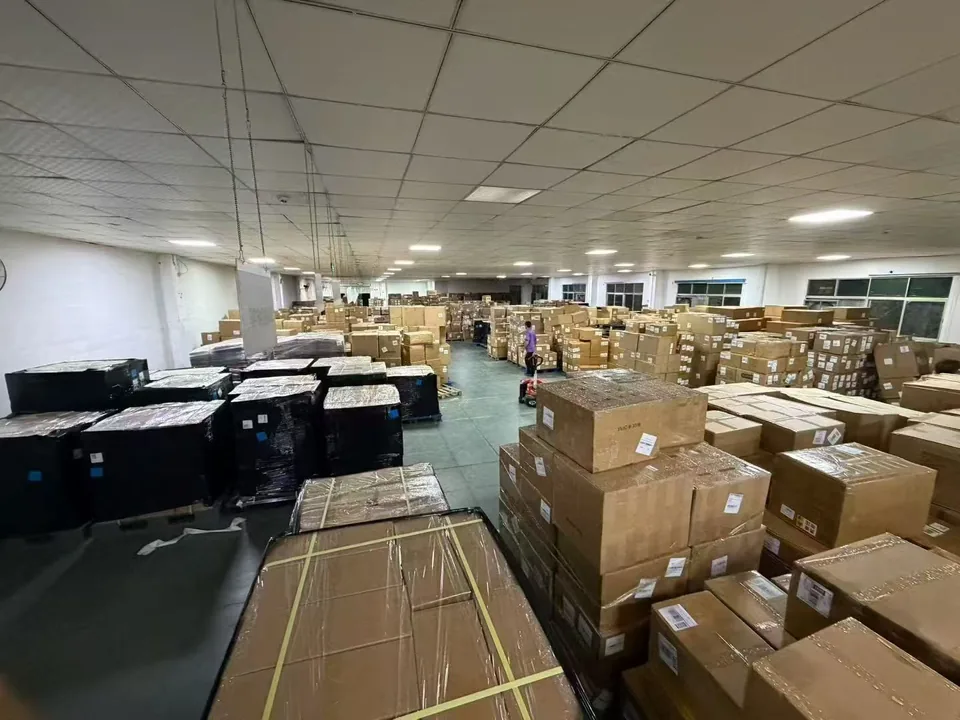
The product itself forces the conversation. LED panels, linear battens and high-bay bars are long, thin and light, so a carton may measure 1.2 by 0.2 by 0.2 metres yet weigh almost nothing. That shape means chargeable volume, not weight, sets the sea and rail price, and it means fragile ends that crack if stacked wrong. Both buyer types must brief the supplier on stacking, bracing and carton reinforcement before production, not after the goods are boxed.
Why the shape of LED fixtures sets your freight price
Measure cube early. A 20-foot container nominally takes about 28 to 30 cubic metres of usable space, but long linear cartons waste space unless they interlock or sit on tailored pallets. If your supplier ships loose cartons, you may only achieve 60 to 70 percent cube utilisation, which quietly raises the cost per saleable unit. Run the real carton dimensions through a CBM calculator before you commit to a container so the per-unit maths is honest.
Breakage is the second cost driver. Tube ends and lens covers crack under point loads, so the carton needs internal corrugation and the pallet needs edge boards. For sea and rail, wrap the stack and strap it; for air, keep cartons under the allowable unit-load height. Tell your forwarder the carton dimensions, gross weight, CBM and stackability up front so they can quote the right mode and build the right unit load.
Weight rarely drives the rate for this cargo, which is the opposite of what many first-time importers assume. A shipment that is heavy for its size pays by weight; a shipment that is light for its size pays by volume. LED fixtures almost always fall in the second group, so negotiate and compare on CBM, and watch for carriers that apply a chargeable-volume minimum per carton.
Air, sea or rail: which mode matches the order
There is no single best mode; the choice follows order size, deadline and cashflow. Ocean LCL is the default for a full wholesale batch because it spreads cost per CBM lowest; railway freight is the middle option when 18 to 25 days door-to-door beats 35-plus days at sea; air is reserved for urgent phase-one stock or a shortfall you must fill before an install date. The table below compares all three on one identical scope.5
Note the Incoterm before you compare. A DAP quote puts destination clearance and delivery on you; a CIF quote only covers port-to-port ocean and hides the inland, terminal and customs steps you still pay. Always request the same Incoterm and the same scope so the numbers are comparable, and read understanding Incoterms before you finalise the commercial terms. FCL beats LCL on cost per CBM only when your cube utilisation is high enough to fill the box without months of warehouse storage.5
| Mode | Scope | Planning cost USD | Transit planning | Use when |
|---|---|---|---|---|
| Air freight | SZX airport to FRA airport, plus trucking both ends | 4,800 | 3-6 days airport-to-airport; 7-12 days door-to-door | Urgent phase-one stock under 2 CBM, fill-ins |
| Ocean LCL | Yantian port to Hamburg port, then rail or truck to Frankfurt | 1,150 | 28-34 days port-to-port; 36-44 days door-to-door | Full wholesale batches, lowest cost per CBM |
| Railway freight | Chongqing rail hub to Duisburg, then truck to Frankfurt | 1,950 | 18-23 days door-to-door | Balanced speed and cost for 4-12 CBM |
All three rows above cover the same 12 CBM, 1,800 kg scope on DAP terms. Live rates move with fuel and capacity, so request a current quote on the identical scope before booking.
Plan CE marking and WEEE before the container loads
CE marking is the importer's responsibility in the EU, and Germany enforces it tightly. As the importer of record you must confirm the fixtures carry valid CE marking, hold the declaration of conformity and technical file, and be ready to show them to market surveillance. Buying on a supplier's word is not enough; verify the documents before goods leave China.1
WEEE and the wider EPR duty fall on the importer too. You must register with the German authority, report the tonnage you place on the market and finance take-back and recycling. This obligation does not disappear under a DDP quote; DDP only changes who prepays, while the importer of record still owns classification, compliance and record-keeping.2 Confirm the product's WEEE category and registration number before the first shipment.
Use Access2Markets to check the import formalities, any controls and the duty treatment that apply to your specific HS code so the commercial invoice and packing list match what German customs expects.3 A mismatch between the declared description and the physical goods is a common cause of clearance delay, and it is the importer who answers for it.
German warehouse receiving: what to arrange in advance
A commercial warehousing dock near Frankfurt or Hamburg is not a residential drop. Book a delivery appointment, confirm the dock has a tail-lift or forklift suited to your pallet weight, and send the carrier the pallet count, dimensions and any hazardous or battery notes. Unannounced arrivals sit in the yard and accrue demurrage that no freight quote included.
Clearing German import needs an EORI number and a customs broker who can file the entry and handle VAT. If you are new to the EU, obtain the EORI before the vessel sails so clearance is not blocked at arrival.4 Keep the CE file, WEEE registration and invoice aligned so the broker can release the cargo on the first attempt rather than after correction loops that cost storage days.
What the landed LED cost really includes
The freight line is only part of the landed price, and LED fixtures accumulate charges at both ends because they are light, bulky and often fragile. Budget for origin trucking to the port or rail hub, origin terminal handling and documentation, the main freight, destination terminal and wharfage, de-consolidation if you ship LCL, the customs broker fee, duty and import VAT, inland to the warehouse, and a tail-lift or appointment fee at receiving.
Two charges catch first-time importers. The first is storage and demurrage when a delivery window is missed at the German warehouse; the second is re-work when cartons arrive damaged because the cheapest packing was chosen. A Planning Example for a 12 CBM LCL shipment on DAP terms might show origin and documentation at about USD 200, main freight near USD 950, destination terminal and de-consolidation near USD 280, broker and entry near USD 160, and inland plus tail-lift near USD 260, before duty and VAT which depend on your HS code.
Treat every figure as a planning estimate and request a current quote on the same Incoterm, because fuel and capacity surcharges move and are not fixed. Import VAT is generally recoverable for a registered business, so separate it from the permanent cost when you model margin. The Germany shipping cost page gives a planning baseline you can reconcile against a carrier quote.
- Origin trucking and loading, often missed when the supplier quotes ex-works.
- Origin and destination terminal handling and wharfage.
- De-consolidation and last-mile appointment or tail-lift at the warehouse.
- Customs broker fee, duty and import VAT on your HS code.
- Demurrage and storage if the receiving window is missed.
- Cargo insurance, worth it where handling points are numerous.
Phase project deliveries to match the install schedule
Project buyers should split the total order into phases that line up with site progress rather than shipping everything at once. Phase one covers showroom or early-install quantities that must arrive first; phase two carries the main batch by sea; phase three tops up remaining lines by rail. This keeps warehouse space free and spreads cash across the build instead of tying it up in stored stock.
The plan below applies one identical 12 CBM scope split across three phases so you can see cost and timing per stage. Each phase uses a different mode on purpose: air for the urgent slice, sea for the bulk, rail for the balancing top-up. The totals reconcile to the same volume as Table 1, just timed to the project rather than shipped together.
| Phase | Scope / contents | Mode | Planning cost USD | Transit | Warehouse window |
|---|---|---|---|---|---|
| 1 | 1.5 CBM showroom / early-install fixtures | Air | 720 | 7-12 days door-to-door | Week 0 |
| 2 | 6.5 CBM main batch, 1,000 kg | Ocean LCL | 1,180 | 36-44 days door-to-door | Week 5 |
| 3 | 4.0 CBM remaining lines, 800 kg | Railway | 720 | 18-23 days door-to-door | Week 9 |
From supplier readiness to final delivery: the process
- Confirm carton dimensions, gross weight, CBM, stackability and HS code with the supplier, and lock the ready date.
- Verify CE marking, declaration of conformity and WEEE registration before production finishes.
- Obtain your EORI and appoint a German customs broker and forwarder.
- Book the mode on a stated Incoterm; for sea or rail, confirm the container or wagon packing plan.
- File or have the forwarder file export clearance in China and load the cargo.
- At arrival, the broker files the import entry; pay duty and VAT; arrange inland to the warehouse.
- Book the delivery appointment and receive against the packing list; report WEEE tonnage after placement.
What to send your forwarder for an accurate quote
- Carton dimensions, gross weight per carton and total CBM, plus stackability notes.
- Total gross weight and any overweight or long-length cartons that affect loading.
- HS code and product description matching the commercial invoice exactly.
- Supplier ready date and the exact delivery address with dock access and equipment.
- Stated Incoterm and whether CE, WEEE and battery documents are already in place.
- Photos of the carton and pallet build so the forwarder can plan unit loads.
- Preferred mode or a request to compare air, sea LCL and rail on the same scope.
Mistakes that inflate LED lighting freight costs
- Treating weight as the price driver when cube controls the rate for long fixtures.
- Shipping one early container for a phased project, then paying storage for months.
- Assuming DDP removes WEEE and CE responsibility from the importer of record.
- Forgetting the EORI, which blocks import clearance at arrival.
- Sending loose cartons that under-fill the container and raise per-unit cost.
Do not compare a port-to-port ocean quote with a door-to-door air quote; the missing inland, terminal and clearance steps will surface as surprise charges at arrival.