
Shipping Packaging Materials from China to the Philippines: Planning Your First Order
For a first order of packaging materials from China to the Philippines, ocean LCL is the lowest-risk mode for bulky cartons, boxes, tape, bubble wrap, stretch film, and wooden crates because volume rather than weight drives the cost. Choose air only for urgent small top-ups under a few hundred kilos. Register with BOC as a Non-Regular Importer for a one-off shipment, or as a Regular Importer if you will reorder. Request an LCL DAP quote, confirm ISPM 15 marks on solid-wood packaging, and plan a 25–40 day door-to-door timeline.
- Ocean LCL is normally the lowest-risk first-order mode for bulky, light packaging goods; air is only for urgent small top-ups.
- First-time buyers should register as BOC Non-Regular Importers, while recurring importers need Regular Importer accreditation (CMO 46-2019 / 08-2022).
- File the Goods Declaration via the E2M system within 15 days of discharge or face storage and penalty exposure.
- China-origin goods may qualify for lower ACFTA/RCEP preferential duty under AHTN 2022 — solid-wood crates and pallets need the ISPM 15 mark.
- Plan a 25–40 day door-to-door window and request a DAP quote that separates freight from carrier terminal and port fees.
On this page
Choosing the Mode for Your First Packaging Order
Most first-time buyers of packaging materials from China to the Philippines should start with ocean LCL (less-than-container load). Cartons, corrugated boxes, tape, bubble wrap, and stretch film are large in volume but light in weight, so the shipment fills cubic meters long before it reaches any weight threshold. LCL lets you pay only for the space your goods occupy, which keeps the entry cost low while you test demand and supplier reliability.
Air freight is attractive for speed but punishing for bulk packaging. Because air charges by chargeable weight — usually the greater of actual weight or volume weight at a 1 CBM ≈ 167 kg divisor — a few pallets of cartons can be priced like a ton of dense cargo. Reserve air for urgent, small top-ups such as a missing pallet of tape or a rushed batch of labels, not for the main stock order.
FCL (full container load) only becomes economical once your order reaches roughly 12–15 CBM or fills a 20ft container. For a genuine first order, committing to a full container adds unnecessary risk if the product specification or demand is still unproven. Start with LCL, prove the supply chain, then graduate to FCL on reorders.
A practical way to size the first order is to run your supplier carton and roll dimensions through a CBM Calculator before committing. Packaging is deceptively voluminous: a thousand flat cartons or a batch of bubble-wrap rolls can exceed ten cubic meters while weighing under a ton. Knowing the CBM early lets you compare LCL and FCL break-even points and avoid booking a mode that is too small or too large for the actual volume.
| Mode | Best for first order | Indicative cost (USD) | Transit (port/airport) | Key consideration |
|---|---|---|---|---|
| Ocean LCL | Mixed cartons, boxes, tape, film, small wooden crates | $900 – $1,400 | 18–30 days port-to-port | Pay per CBM; lowest entry cost for bulky light goods |
| Ocean FCL | Full 20ft/40ft of uniform packaging stock | $1,800 – $3,200 | 16–28 days port-to-port | Economical only above ~12–15 CBM or a full load |
| Air | Urgent small top-up (under ~300 kg) | $2,400 – $4,000 | 3–7 days airport-to-airport | Volume weight (1 CBM ≈ 167 kg) makes cartons costly |
The numbers above are illustrative planning ranges. Carrier terminal and port fees are announced by carriers and can change, so always request a current quote before booking6.
Understanding Chargeable Weight and Why Volume Drives Ocean Cost
Packaging materials are the classic high-cube, low-weight commodity. A corrugated carton stack or a roll of stretch film occupies a large box on a container but tips the scale very little. For ocean LCL this works in your favor: the freight is quoted per CBM, and your light cargo rarely triggers weight-based penalties. For air, the same geometry works against you, because the volume is converted into a heavy chargeable weight.
The sample below shows how a realistic first-order mix builds up. Notice that the total actual weight is only about 2,710 kg, yet the equivalent air chargeable weight exceeds 3,300 kg because every cubic meter is multiplied by 167. Ocean cost tracks the 20.2 CBM; air cost tracks the 3,374 kg. This single difference is why LCL wins for the bulk order and air is reserved for emergencies.
When measuring your own mix, do not trust catalog weights alone — stretch film and bubble wrap are often quoted per roll but ship in bulky cartons that waste container space if not stacked tightly. Have the supplier provide outer-carton dimensions and stack height, then compute the true CBM including pallet footprint. The gap between theoretical and actual volume is where first orders quietly lose money, so measure before you quote.
| Item | Qty | Actual wt (kg) | Volume (CBM) | Air chargeable wt (kg) |
|---|---|---|---|---|
| Corrugated cartons (flat) | 2,000 pcs | 480 | 6.5 | 6.5 × 167 = 1,086 |
| Stretch film rollstock | 40 rolls | 720 | 4.2 | 4.2 × 167 = 701 |
| Bubble wrap rolls | 30 rolls | 360 | 3.1 | 3.1 × 167 = 518 |
| Packing tape | 500 rolls | 250 | 1.4 | 1.4 × 167 = 234 |
| Wooden crates (ISPM 15) | 20 crates | 900 | 5.0 | 5.0 × 167 = 835 |
| Totals | — | 2,710 kg | 20.2 CBM | Ocean: 20.2 CBM / Air: 3,374 kg |
These volumes and weights are illustrative for planning. Measure your actual supplier cartons and roll dimensions, then re-run the build-up. They are not a live quotation and carrier terminal or port fees may apply on top6.
Philippine Import Setup and BOC Accreditation
Before goods arrive, the importer must be properly admitted. Under BOC guidelines on importation, an importer must meet admission requirements, prepare the required documents, and file a Goods Declaration through the E2M system; the rules also cover tariff classification, advance ruling requests, and checks for regulated, restricted, or prohibited goods1.
A key first-order decision is the type of accreditation. BOC accredits importers, and a one-off first order can be registered as a Non-Regular Importer, while recurring purchasing needs Regular Importer accreditation under CMO 46-2019 and the updating issuance 08-20222. If you expect to reorder packaging stock monthly or quarterly, applying for Regular Importer status early saves repeated one-off paperwork.
Filing the E2M Goods Declaration Within 15 Days
Once the shipment discharges at the Philippine port, the clock starts. BOC guidelines require the importer (or broker) to lodge the Goods Declaration via the E2M system within 15 days of discharge1. Missing this window exposes the cargo to demurrage, storage charges, and potential penalties, which can erase the savings of an otherwise well-planned LCL shipment.
Build the declaration early: assemble the commercial invoice, packing list, bill of lading, and any permits before arrival so the filing is a formality rather than a race. An advance ruling on tariff classification can also be requested beforehand to remove uncertainty on duty liability.
Tariff Classification and ACFTA/RCEP Preference
Duty is driven by how the goods are classified. Use the Philippine Tariff Finder built on the AHTN 2022 nomenclature to determine the applicable tariff line, then check both the MFN schedule and the free-trade schedules for the years 2024–20283. Packaging materials often sit across several headings — cartons, adhesive tape, plastic film, and wooden crates may each classify differently, so classify each line item, not just the shipment as a whole.
Rules of origin for China-origin goods
Because the goods originate in China, they may qualify for lower preferential duty under the ACFTA or RCEP schedules rather than the higher MFN rate3. Confirm the specific product meets the rules of origin (typically sufficient transformation and the correct origin certificate) before claiming the preference, or BOC may reassess at the MFN rate.
Keep the preference claim practical: a small number of packaging lines usually drives most of the value, so prioritize getting origin certificates right for those high-value items first. Supporting documents such as the supplier invoice and a clear description of manufacturing origin should travel with the shipment so the broker can defend the claim during assessment.
Preferential schedules 2024–2028
The Tariff Finder publishes the ACFTA and RCEP preferential duty schedules covering 2024–2028, so the rate you plan with today may shift on the published annual schedule3. Always confirm the latest official rate or notice before finalizing landed-cost math, since figures can change between schedule years.
Wood Packaging and the ISPM 15 Requirement
If your packaging order includes solid-wood crates, pallets, or dunnage, the wood must carry the ISPM 15 mark certifying heat treatment or fumigation, or Philippine quarantine can reject or re-treat it at your cost4. This is a frequent first-order surprise because buyers focus on the cartons and forget the wooden crate around them.
Engineered wood such as plywood and OSB is exempt from the ISPM 15 mark because it is processed and considered low risk4. If you can substitute plywood crates or composite pallets for solid timber, you remove a whole compliance step — a practical win for a first shipment.
Packing the Shipment for the Voyage
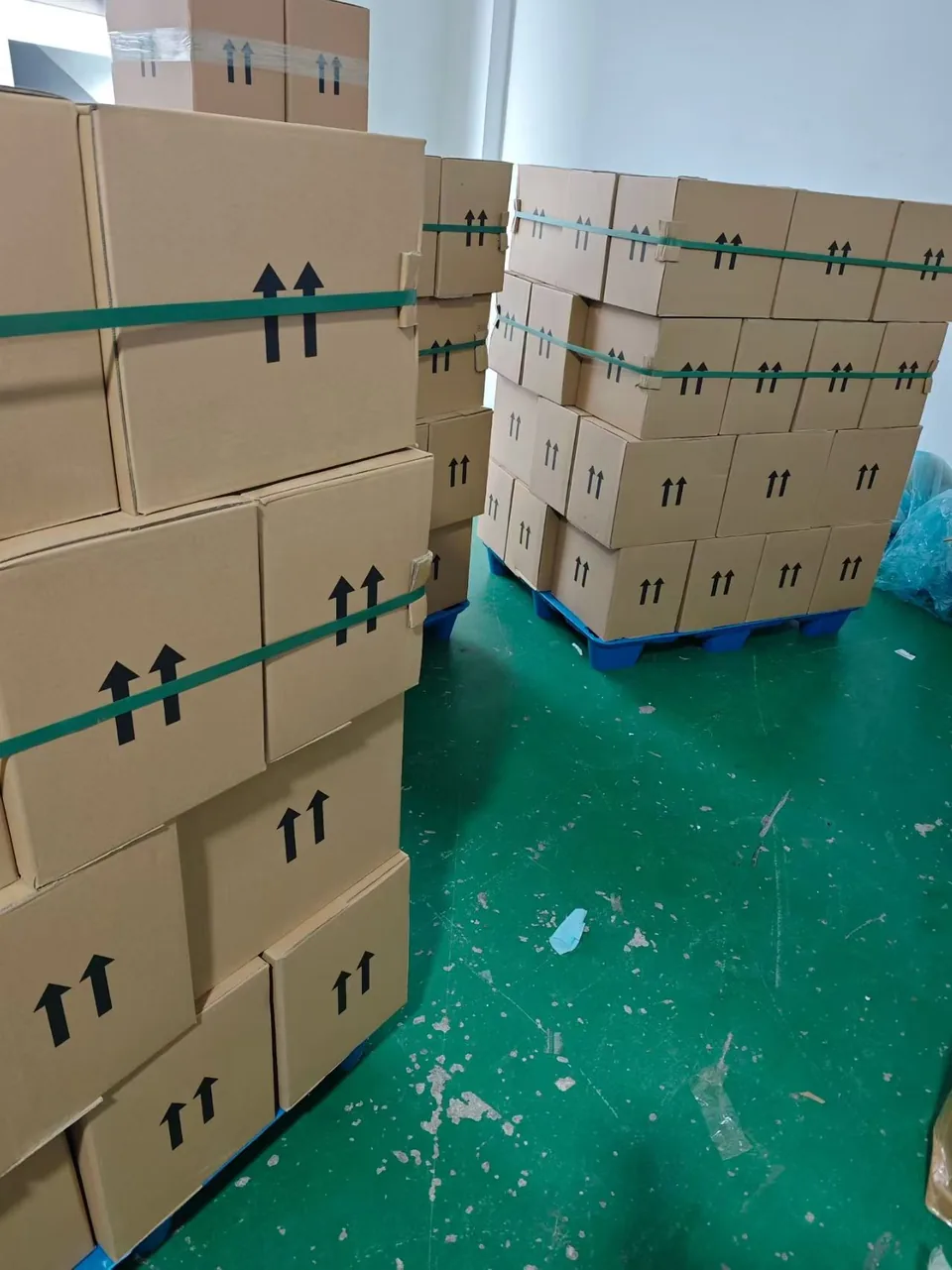
Good packing is what keeps a low-cost LCL shipment from turning into a damage claim. Strap cartons to a base, shrink-wrap rollstock so ends cannot unravel, and keep weight centered on the pallet. For wooden crates, verify the ISPM 15 mark is visible on at least two sides before the supplier seals them.
A clean, palletized, strapped consignment also speeds up both origin handling and destination devanning, which helps protect your 15-day declaration window. Photograph the packed units at the supplier for your records and the forwarder's reference.
If the order mixes cartons with a few wooden crates, keep the wooden units on a separate, clearly marked pallet so quarantine inspection can be completed without opening the entire shipment. Label each pallet with its contents and CBM so the destination warehouse can stage devanning efficiently and your broker can cross-check the packing list against the Goods Declaration.
Step-by-Step: Importing Your First Order
- Confirm your importer status: apply as BOC Non-Regular Importer for a one-off, or Regular Importer if reordering2.
- Request an LCL DAP quote that separates ocean freight from carrier terminal and port fees6.
- Classify each packaging line in the AHTN 2022 Tariff Finder and check ACFTA/RCEP preference for China origin3.
- Specify Incoterms 2020 on the proforma so cost and risk allocation are clear5.
- Confirm ISPM 15 marks on any solid-wood crates or pallets; substitute plywood if possible4.
- Book the LCL, pack and palletize, then prepare invoice, packing list, and bill of lading.
- On discharge, file the Goods Declaration via E2M within 15 days1.
Door-to-Door Time Plan: 25–40 Days
A realistic door-to-door plan for an LCL first order runs 25–40 days. The range absorbs supplier lead time, consolidation at the Chinese origin warehouse, ocean transit, and Philippine customs clearance. Air compresses this to under a week but at a steep premium, so only use it when stock-out cost exceeds freight cost.
- Days 1–7: supplier production and packing; confirm ISPM 15 marks and carton dimensions.
- Days 8–10: origin consolidation and LCL booking; cargo stuffed at CFS.
- Days 11–30: ocean transit, port-to-port roughly 18–30 days depending on the Chinese load port.
- Days 31–34: arrival, discharge, and document hand-off to your Philippine broker.
- Days 35–40: E2M Goods Declaration, assessment, duty payment, and final delivery to your warehouse.
The 18–30 day figure is port-to-port for ocean and 3–7 days airport-to-airport for air. Door-to-door adds origin handling, customs, and last-mile trucking, which is why the full plan reaches 25–40 days.
Requesting and Comparing Quotes
A good quote request prevents the most common cost surprises. Send your forwarder a complete packing list with per-item dimensions and weights, your preferred Incoterm, and the destination address so the quote reflects door-to-door rather than only port-to-port.
- Itemized CBM and weight build-up (use the CBM Calculator to verify).
- Ocean freight separated from carrier terminal and port fees6.
- Customs clearance and brokerage scope, including E2M filing1.
- Duty estimate using AHTN 2022 and any ACFTA/RCEP preference claimed3.
- Incoterms 2020 stated explicitly so responsibility is unambiguous5.
- ISPM 15 compliance confirmation for wooden crates or pallets4.
- Transit window quoted as door-to-door, not just port-to-port.
Choosing the Right Incoterm
Incoterms 2020 allocate cost and risk between buyer and seller, and the choice shapes your first-order experience5. For a first shipment, DAP (Delivered at Place) is often simplest: the seller handles export and main carriage to your named Philippine destination, and you handle import clearance and duty. This keeps your exposure contained while you learn the local process.
Avoid EXW for a first order — it pushes all export packing, origin formalities, and main carriage onto you, which is risky before you know your forwarder network. Once you are reordering regularly, FOB or CFR can be cost-effective as you gain leverage with a chosen carrier.
Common First-Order Mistakes
These are the errors that most often turn a cheap LCL packaging order into a costly one. Address each item on your pre-shipment checklist.
- Booking air for bulk cartons and film instead of LCL, inflating cost via volume weight.
- Skipping BOC accreditation and discovering at discharge you cannot clear the goods2.
- Missing the 15-day E2M Goods Declaration window and incurring storage and penalties1.
- Forgetting ISPM 15 marks on solid-wood crates, triggering quarantine re-treatment4.
- Assuming MFN duty without checking ACFTA/RCEP preference for China origin3.
- Quoting only port-to-port and forgetting carrier terminal and port fees in the landed cost6.
Frequently asked questions
What is the best shipping mode for my first packaging materials order from China to the Philippines?
Do I need BOC accreditation to import my first order?
What is the 15-day E2M declaration window?
How do I classify packaging materials for Philippine duty?
Can China-origin packaging get lower duty under ACFTA or RCEP?
Do wooden crates and pallets need ISPM 15 treatment?
Which Incoterm should a first-time importer use?
What documents should I give my forwarder for a quote and clearance?
Sources & References
- Bureau of Customs (Philippines) — Guidelines on Importation
- Bureau of Customs (Philippines) — Accreditation / Registration of Importers
- Tariff Commission (Philippines) — Philippine Tariff Finder
- IPPC/FAO — ISPM 15 Regulation of wood packaging material in international trade
- ICC — Incoterms 2020
- Maersk — New Terminal Fees for U.S. & Canada Imports