
Seasonal Apparel Air Freight from China to the USA
Illustrative shipping scenario. Shipment details and timelines are examples.
Air consolidation of 80 cartons / 4,000 garments from several Guangzhou suppliers to a Los Angeles warehouse, planned inside a 7–10 day door-to-door window.
Scenario Overview
A US apparel importer needs a pre-season garment program on the sales floor inside a tight replenishment window. This scenario plans 80 cartons — 4,000 unbranded garments — collected from several Guangzhou suppliers, consolidated into one air shipment, flown from Guangzhou Baiyun Airport (CAN) to Los Angeles (LAX), and trucked to the importer's local warehouse. The plan is built around three levers: carton and shipping-mark reconciliation across suppliers before airline acceptance, an uplift slot reserved early in the September 8, 2026 peak-season market, and a billing-weight picture settled at booking so the air cost is known before cargo is committed to the flight.
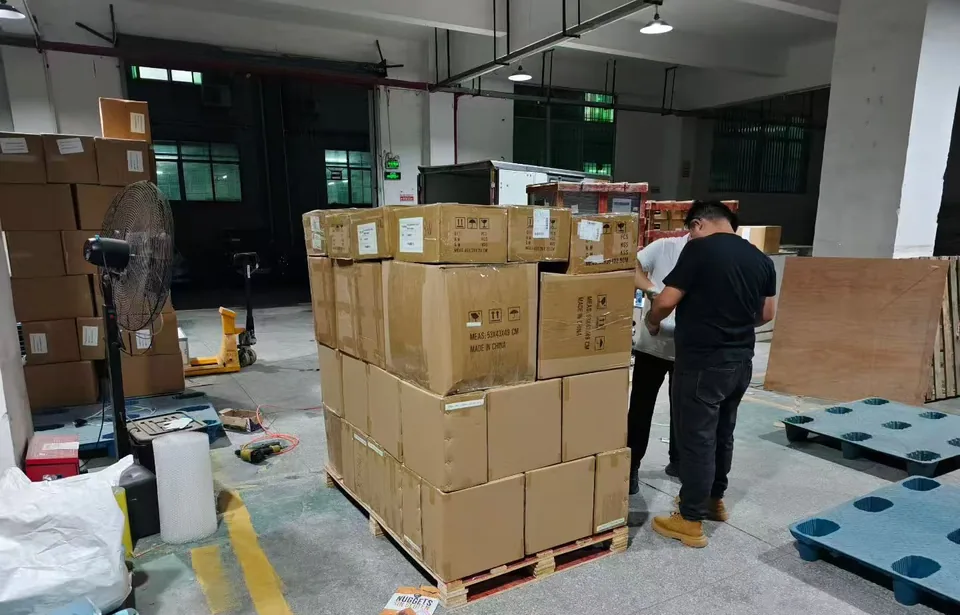
Operation photo — it shows a typical handling step of this shipment type, not the example batch described here.
Shipment at a Glance
| Route | Guangzhou supplier pickups → Guangzhou Baiyun Airport (CAN) → Los Angeles (LAX) → local warehouse |
| Transport mode | Consolidated air freight with destination trucking |
| Cargo | Unbranded, general-category garments (no branded or restricted content) |
| Quantity | 80 cartons / 4,000 pieces |
| Gross weight | 960 kg |
| Volume | 6.4 CBM |
| Planned uplift date | September 8, 2026 (example plan date) |
| Target door-to-door transit | 7–10 calendar days |
Customer Requirements
- One retail replenishment window that opens about two weeks after cargo readiness, so the air plan has to land inside 7–10 days door-to-door.
- Cartons originate from several Guangzhou suppliers and must reconcile — counts, carton numbers and shipping marks — before the airline accepts the consignment.
- Cargo stays general-category: no branded or restricted content, declared exactly per the packing list.
- The importer wants the air cost understood before booking, including how volumetric weight changes the bill.
Key Challenges
- Multi-supplier consolidation — cartons from different factories must arrive, be counted and have shipping marks matched to one packing list before acceptance.
- Peak-season space — early September is a high-demand period on the China–US air lane; capacity and rates move quickly, so the uplift slot is reserved in advance.
- Billing-weight economics — with 6.4 CBM against 960 kg actual weight, volumetric weight governs the charge, so carton dimensions directly move the cost.
- One shipment, one document set — the export declaration, air waybill and US entry filings must all describe a single consolidated consignment.
Proposed Shipping Plan
- Supplier pickups and consolidation. Collection runs from each Guangzhou supplier to one consolidation point. Cartons are counted against the packing list, carton numbers and shipping marks are checked, and any shortfall is flagged before anything is booked.
- Inspection and export packing. Carton condition, dimensions and per-carton weights are recorded. Cargo is presented loose-loaded or palletized to the airline's requirements, and no branded or restricted item is allowed into the consignment.
- Air booking. Consolidated space is reserved on the CAN → LAX routing for the planned September 8 uplift. The flight schedule, terminal cut-off and free time are confirmed with the carrier before the cargo is delivered to the airport.
- Chargeable-weight check. Actual weight (960 kg) is compared with volumetric weight — 6.4 CBM converts to roughly 1,069 kg under the standard 1:6000 air rule. The chargeable figure, the higher of the two under the carrier's own rules, is confirmed at booking rather than discovered on the invoice.
- Export customs. The export declaration is lodged against the commercial invoice and packing list and released ahead of the airline cut-off.
- Air main leg and delivery. Cargo flies CAN → LAX in the booked consolidation, clears entry with the US broker, is deconsolidated and trucked to the importer's warehouse, where proof of delivery closes the file.
Example Timeline
| Phase | Example timing | Notes |
|---|---|---|
| Supplier pickups and consolidation in Guangzhou | Day 0–1 | Runs in parallel with document preparation at the suppliers. |
| Carton count, mark verification and airline acceptance | Day 1–2 | Parallel: the export declaration is lodged in the same window. |
| Export release and terminal cut-off | Day 2–3 | Planned uplift ex CAN: September 8, 2026. |
| Departure and arrival at LAX | Day 3–4 | Freighter or belly capacity per the booking. |
| US entry, release and deconsolidation | Day 4–6 | Broker clearance typically closes within a day or two of arrival. |
| Trucking to the importer's warehouse | Day 7–10 | Delivery completes inside the 7–10 day target window. |
Days are counted from cargo readiness at the first supplier. Stages marked “parallel” can overlap; the rows add up to the 7–10 day target.
Documents & Preparation
- Commercial invoice — Value and description behind the export declaration and the US entry.
- Packing list — Carton-level counts, weights and marks — the reference for the consolidation checks.
- Export declaration data — Lodged in China before the airline cut-off.
- Air waybill — Issued for the consolidated consignment by the carrier or its agent.
- US customs entry filings — Prepared by the destination broker; content mirrors the invoice and packing list.
Document needs vary by cargo and lane; this list covers the filings this scenario relies on, not a universal checklist.
What This Plan Is Designed to Achieve
- Put the replenishment program on the sales floor inside a 7–10 day door-to-door window by reserving the uplift slot before peak-season space tightens.
- Turn several supplier lots into one documented air consignment, so counts and marks reconcile before uplift instead of at the warehouse.
- Make the air cost predictable by settling the chargeable-weight question — volumetric versus actual — at booking.
- Keep every stage from pickup to delivery evidenced, so the importer can trace the consignment end to end.
Scenario FAQ
How is chargeable weight worked out here?
Can several suppliers really ship as one air consignment?
What happens if the flight is delayed in peak season?
Plan your real shipment
Send your route and cargo — we'll build a solution for you.